Copy the Principle, Not the Exact Thing
The most common trap when falling in love with maximalist editorial spreads is attempting to hunt down and purchase the exact items shown in the photographs. This approach leads to budget exhaustion, stress, and a space that feels like an artificial retail set rather than an authentic, collected home. An editorial photograph is a two-dimensional composition captured under intense professional studio strobes, inside an architectural structure that likely shares nothing with your living room’s ceiling height, natural orientation, or daily family routines.
Direct copying fails because it treats interior curation as a consumer checklist rather than a spatial dialogue. If an architectural publication showcases a sixty-thousand-dollar antique Nigerian palace door used as a dining room screen, you do not need to scour high-end auction houses or buy a poorly made plastic imitation. Instead, understand the design principle: the space needed a tall, dark, textural wood element with historic carving to provide vertical rhythm and break up flat drywall. Once you understand the principle, you can translate it into your own world—perhaps by sourcing a vintage carved mid-century room divider or a pair of reclaimed colonial louvered shutters, waxing them in deep espresso, and achieving the same grounding warmth for a fraction of the cost.
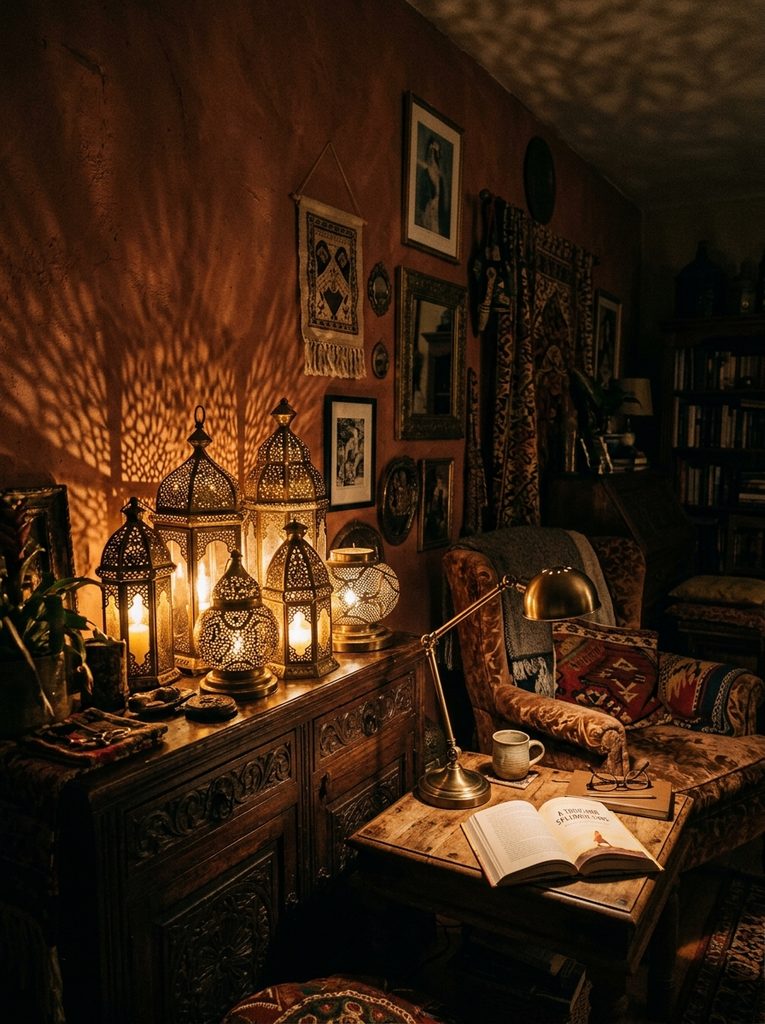
| Instead of Copying This | Borrow This Principle |
|---|---|
| $8,000 Custom Antiqued Plaster Walls | Apply a $60 DIY mineral lime paint in warm raw terracotta using sweeping, expressive cross-hatch brushstrokes. |
| Piles of Low-Slung Floor Pillows | Place firm, supportive twenty-two-inch down-filled mudcloth lumbar cushions on your existing high-backed, ergonomic armchairs. |
| $12,000 Antique Bamileke Beaded Tables | Group three varied-height, dark-stained carved hardwood plant stands to serve as an artistic, multi-tiered coffee table. |
| Wall-to-Wall Hand-Knotted Antique Silks | Layer an authentic, heavy-pile vintage Moroccan wool runner over a durable, budget-friendly natural jute bouclé base rug. |
| High-Maintenance Indoor Greenhouse Collections | Feature two large-scale architectural plants (such as a Bird of Paradise or Snake Plant) in substantial unglazed terracotta floor urns. |
| $5,000 Bespoke North African Pierced Chandeliers | Cluster thrifted, hand-pierced Moroccan brass table lanterns on a low credenza to create a flattering, low-elevation evening perimeter glow. |