Walk into any big-box decor showroom or scroll through social media, and you will notice a wearying sameness: sea-of-beige sectionals, soulless mass-market prints, and rooms stripped of history, texture, and character. For mature homeowners who have lived through decades of shifting design fads, this sterile aesthetic feels especially hollow. Your home should reflect an accumulated life, rich cultural appreciation, and an effortless ease—not an impersonal catalog spread. Yet the moment you attempt to curate an authentic, soulful space, design media bombards you with patronizing rules about what is “age-appropriate,” practical, or timeless.
Here is the truth: you do not need prescriptive rules, dowdy compromises, or high-end showroom invoices to design a deeply personal living space. What you need is better, more discerning inspiration. This is where Afrohemian decor shines—a vibrant marriage of African artisanal heritage, global textiles, sculptural flora, and lived-in bohemian comfort. The secret to mastering budget Afrohemian living room decor ideas without overwhelming your home or your wallet is simple: never copy a whole room verbatim. Instead, borrow one useful principle—a high-contrast textile placement, a strategic lighting glow, or a clever salvaged vignette—and filter it through your existing pieces. Below, we examine ten distinct, highly achievable approaches that deliver authentic character, rich warmth, and accessible luxury on your own terms.
What Makes Afrohemian Decor Worth Choosing
In an era of flat, disposable trends, Afrohemian style stands out because it prioritizes tactile depth, cultural storytelling, and architectural comfort over synthetic perfection. Surface-level bohemian often devolves into cluttered novelty: cheap macramé, flimsy faux-plants, and flimsy printed polyester throws that wrinkle and pill within a season. True Afrohemian styling operates on weight, warmth, and enduring craft.
When scouting genuine inspiration for everyday Afrohemian living room decor, look for spaces that balance organic raw materials with curated intention:
- Honest, grounding materials: Heavyweight mudcloth (Bògòlanfini), hand-dyed indigo, carved mango wood, and hand-beaten brass that gain character as they age.
- Layered spatial warmth: Low-slung visual weight balanced by vertical greenery and warm, amber-toned accent illumination rather than harsh overhead cans.
- Restraint amid maximalism: A disciplined color bridge (such as deep terracotta, rich umber, bone white, or brass) that keeps vibrant patterns cohesive rather than chaotic.
- Cultural narrative and authenticity: Sourcing handcrafted goods directly from artisan collectives or independent makers rather than buying mass-produced machine imitations.
- Ergonomic, mature livability: Substantial seating, non-slip textured vintage runners, readable lighting, and accessible display heights that prioritize daily ease alongside artistry.
| Approach / Idea | Best Inspiration For | The Detail Worth Borrowing |
|---|---|---|
| The Mudcloth Statement | Grounding neutral sofas with architectural contrast | Single oversized graphic lumbar pillow over matching sets |
| Salvaged Architectural Wood | Adding age and structural heft on a dime | Repurposing weathered railway ties or live-edge slabs as low coffee tables |
| The Layered Rug Foundation | Covering tired flooring while building rich texture | Layering a small vintage hand-knotted runner over a thick, inexpensive jute base |
| Sculptural Botanical Canopy | Creating vertical elegance and indoor vitality | Anchoring room corners with mature Birds of Paradise in raw terracotta pots |
| Indigo Wall Tapestries | Large-scale artistic presence without expensive framing | Hanging hand-dyed West African textiles from dark-stained timber dowels |
| The Brass & Amber Vignette | Evening ambiance and warm, flattering lighting | Clustered brass candlestick holders paired with linen-shaded accent lamps |
| Woven Basket Wall Relief | High-impact three-dimensional gallery walls | Flat, shallow Tonga and Binga baskets arranged in an asymmetrical, floating crescent |
1. The Heritage Textile Anchor: Graphic Mudcloth & Deep Indigo
Pairing genuine Malian mudcloth with West African fermented indigo establishes an instant, sophisticated focal point in any living area. These handwoven cotton textiles carry an irreplaceable tactile presence that transforms even an ordinary thrifted sofa into an editorial anchor.
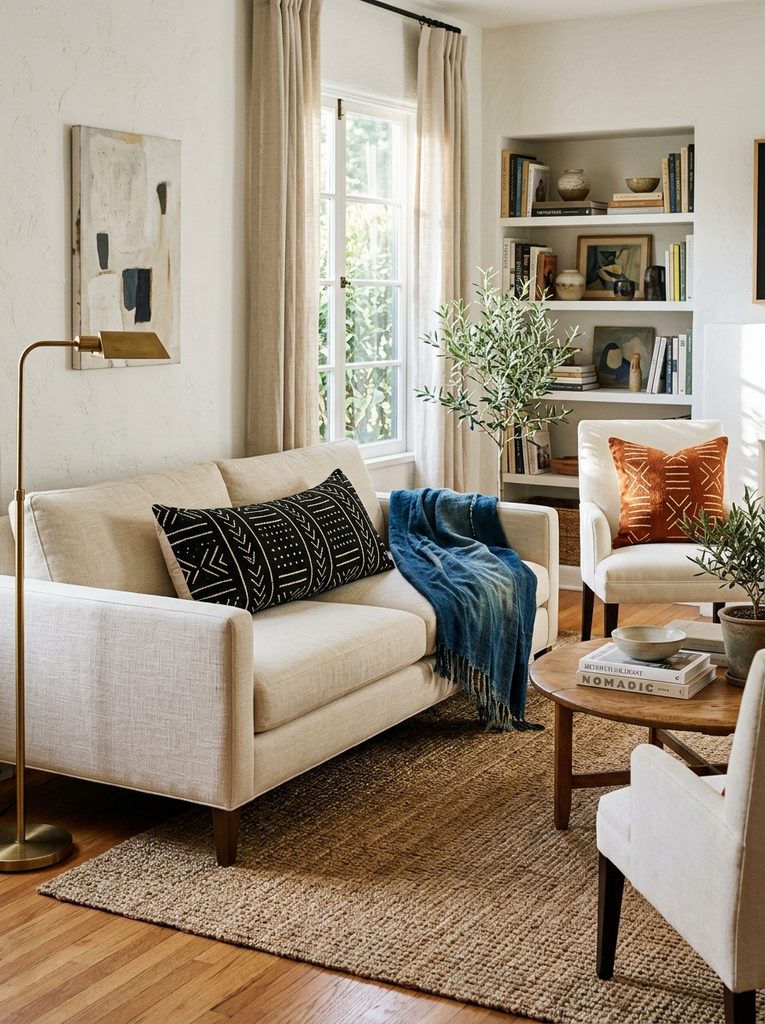
Consider a recent project featuring a standard tailored cream sofa in textured linen. Instead of scattering dozens of fussy, machine-embroidered pillows, the seating was anchored with a single, dramatic 14×36-inch hand-stitched black-and-bone geometric mudcloth lumbar pillow. Draped intentionally across one arm sat a vintage Mossi indigo throw—its deep, mineral-washed cobalt tones showing subtle fading along the hand-sewn central seams. Across the room, a simple bone-white accent chair held a smaller, rust-toned mudcloth bolster dyed with organic tree bark extract. Because the fabrics possess real substance and imperfect hand-loomed selvages, they immediately elevate the surrounding inexpensive furniture, conferring an air of curated maturity.
When sourcing on a sensible budget, bypass expensive decor boutiques that mark up vintage textiles by 400%. Seek out independent African textile merchants on marketplace platforms, or purchase vintage textile remnants and stitch envelope pillow covers yourself. The natural irregularities in the weave and vegetable dyes provide an effortless, grounded elegance that sterile department store cushions cannot replicate.
Color & Texture Note: When layering contrasting graphic textiles like black-and-white mudcloth and cobalt indigo, keep the background upholstery neutral (natural flax, biscuit, or warm taupe) to allow the depth of the artisanal dyes to breathe without visual competition.