Altering the atmosphere of a master bedroom requires moving away from conventional styling approaches to focus intentionally on color psychology, light absorption, and texture integration. As a deeply personal space intended for rest, recovery, and quiet reflection, the bedroom serves as an ideal canvas for exploring rich, saturated wall colors. This comprehensive DIY tutorial delivers ten distinct dark and moody paint ideas designed to help you execute a professional-grade room renovation. Readers will learn the essential principles of color selection, understanding undertones, balancing surface sheens, and handling painting tools for smooth results. Implementing a well-laid-out creative project helps improve overall home decor, minimizes visible wall texturing flaws, and establishes a clear layout that highlights furniture pieces. Each featured concept provides reliable step-by-step guidance on choosing compatible primers, managing application layers, and pairing deep colors with warm illumination. By controlling the application process yourself, you can easily turn a cold, bright bedroom into an artfully curated environment that reflects a balanced, timeless visual identity.
Why Enclosed Atmospheric Palettes Dominate Modern Bedroom Design
The growing popularity of dark, dramatic color stories within modern Pinterest ideas stems from their exceptional ability to blend practical household value with cozy interior design. Modern home planning has shifted away from flat white spaces, moving instead toward a minimalist style mixed with rich historical colors that offer comfort and visual depth. These handmade renovations carry massive DIY appeal because they show homeowners how to build high-end character using affordable paint materials rather than buying expensive furniture. From a design perspective, introducing dark jewel tones, rich charcoal shadows, and deep earthy greens creates an immediate sense of scale, warmth, and architectural permanence. This creative project focus serves as an achievable entry point for beginners, breaking down basic masking, edging, and rolling techniques into clear, manageable steps. These trending ideas demonstrate that thoughtful planning can make any small bedroom feel highly curated, cozy, and luxurious, offering budget ideas that produce premium, lasting results.
Technical Materials Procurement and Workspace Configuration
Achieving a clean finish on an easy project requires systematic material preparation and a highly organized workspace before opening any paint cans or applying tape. The primary supplies for these moody transformations include premium low-VOC matte latex interior paints, specialized high-hiding grey primers, patch compounds, and high-adhesion painter’s tape. Essential tools for these builds include an orbital sander, a collection of angled synthetic sash trim brushes, high-density microfiber paint rollers, and a reliable laser level. To prepare the workspace safely, clear all small furniture items out of the room and cover the floors with heavy canvas drop cloths to capture drips. Clean all walls thoroughly with a heavy-duty household cleaner to ensure new dark paints bond securely to the drywall without peeling over time. Proper planning involves checking your natural light sources and mapping out your outlet locations to ensure the upcoming accent lighting fixtures sit symmetrically across the space.
Idea 1: Deep Charcoal with Undertones of Velvet Slate
How to Create
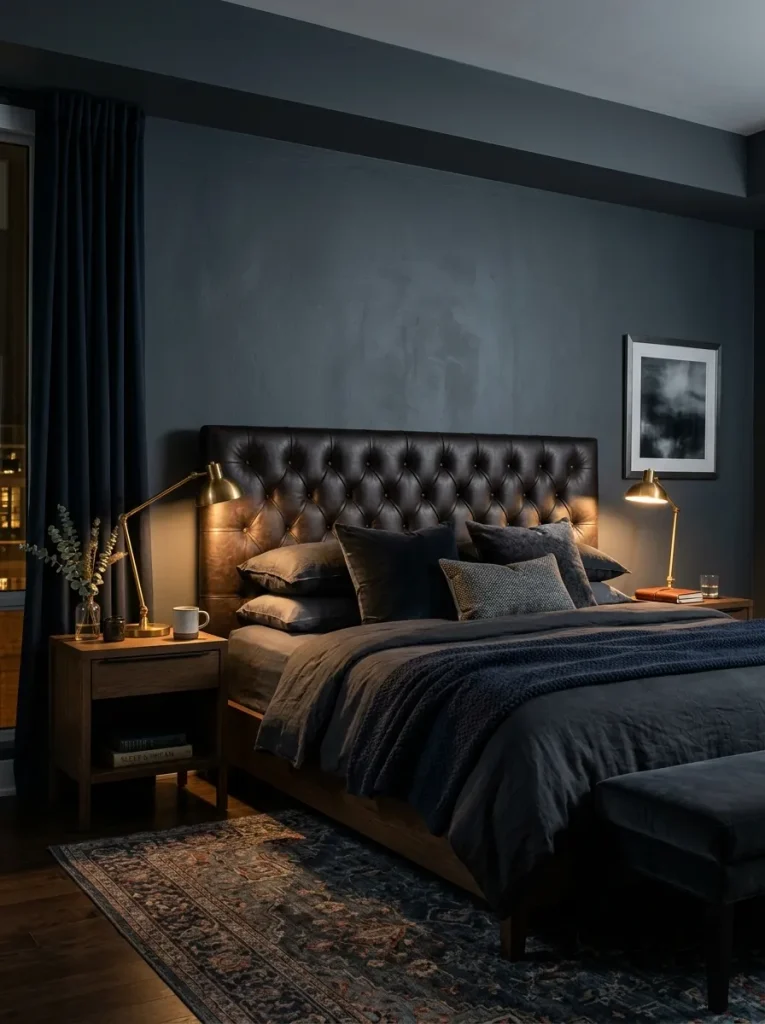
The deep charcoal design establishes a sophisticated, historic castle texture by focusing entirely on organic chalky patterns and rich side-shadow play on the walls. This concept relies on applying a rich charcoal latex paint with subtle slate-blue undertones, creating a dramatic visual backdrop that grounds the entire room’s layout. The cool, dark grey tones of the cured paint coordinate beautifully with rich leather headboards and warm industrial brass lighting, providing a surface that catches ambient light beautifully. This timeless style fits perfectly into large master bedrooms, basement guest suites, and traditional dens, offering a durable design that hides surface scuffs well. The velvet slate layout is exceptionally practical because the dark color visually minimizes uneven drywall patches, keeping the room looking smooth.
The execution process begins by wiping down your selected walls with a damp microfiber cloth to remove dust, letting the drywall dry completely before priming. Apply a single coat of specialized high-hiding grey primer across the surface using a high-density microfiber roller, ensuring a completely uniform foundation for the dark paint. Mix your deep charcoal paint thoroughly using a clean wooden stir stick, pouring a portion into a sturdy plastic roller tray. Dip an angled two-by-half-inch synthetic sash brush into the paint, cutting in carefully along the ceiling lines, baseboards, and corner joints. Use your microfiber roller to apply the main wall coats in overlapping, vertical W-shaped patterns to prevent noticeable lap lines from forming. Allow the first coat to dry for four hours, then apply a second layer to ensure deep color richness across the entire space.