Copy the Principle, Not the Exact Thing
The most frequent design disaster occurs when a homeowner falls in love with an editorial magazine spread and attempts to track down and purchase every specific lamp, table, rug, and fabric swatch featured on the page. This approach invariably leads to severe buyer’s remorse, budget overruns, and an uncanny, stage-set quality in your home. Direct copying fails because a photograph captures a single, tightly controlled optical perspective staged under professional studio lights, in an architectural container that likely shares nothing with your home’s floor plan, window exposure, ceiling clearance, or everyday practical needs.
When you study breathtaking designer spaces, look past the specific product tags and identify the core spatial principle at work. If an interior designer features an eight-thousand-dollar antique Cameroon Bamileke feather headdress mounted above a fireplace, do not rush to purchase an inferior, synthetic plastic knockoff online. Recognize the true design principle: the room needed a bold, textured, circular radial silhouette on that wall to break up repetitive rectangular architecture. Once you understand the principle, you can execute it within your own aesthetic and financial parameters—using a curated collection of woven sweetgrass trays, a DIY raffia burst, or an arrangement of round carved timber platters that cost a fraction of the price while feeling personal and grounded in your life.
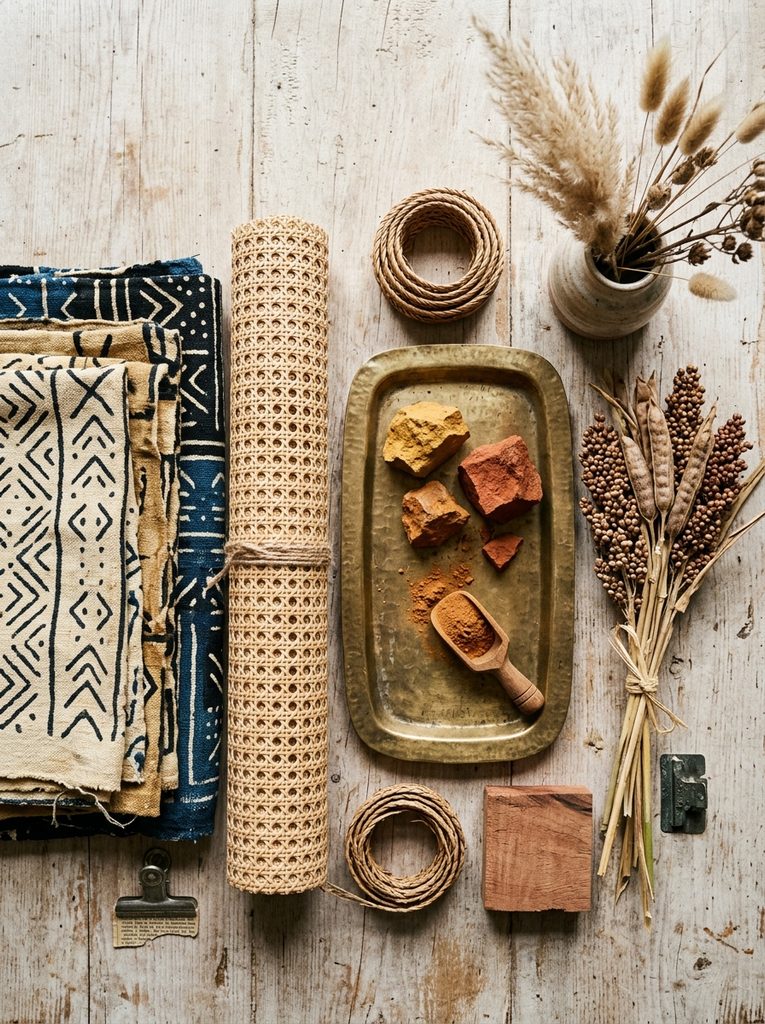
| Instead of Copying This | Borrow This Principle |
| $4,000 Custom Antiqued Plaster Wall Finishes | Apply a $45 DIY mineral lime wash tinted with raw terracotta pigment in sweeping cross-hatch strokes to achieve textured matte movement. |
| Piles of Low-Slung Floor Pillows & Futons | Add dense, high-resilience lumbar pillows wrapped in vintage mudcloth to supportive, high-backed ergonomic armchairs. |
| Extravagant Architectural Tropical Indoor Trees | Group three varied-height, low-maintenance snake plants and ZZ plants in oversized, thrifted terracotta vessels elevated on wooden stands. |
| $3,500 Hand-Knotted Antique Tribal Rugs | Layer a compact, authentic vintage hand-loomed flatweave or runner over a massive, budget-friendly natural jute bouclé base carpet. |
| Bespoke Hand-Carved African Hardwood Consoles | Sand and chisel an inexpensive second-hand pine table by hand, then oxidize it with vinegar-iron stain for authentic hand-hewn weight. |
| Expensive Designer Brass Architectural Chandeliers | Mount thrifted hand-beaten brass platters as reflective wall sconces paired with 2200K warm-amber filament bulbs for flattering perimeter glow. |