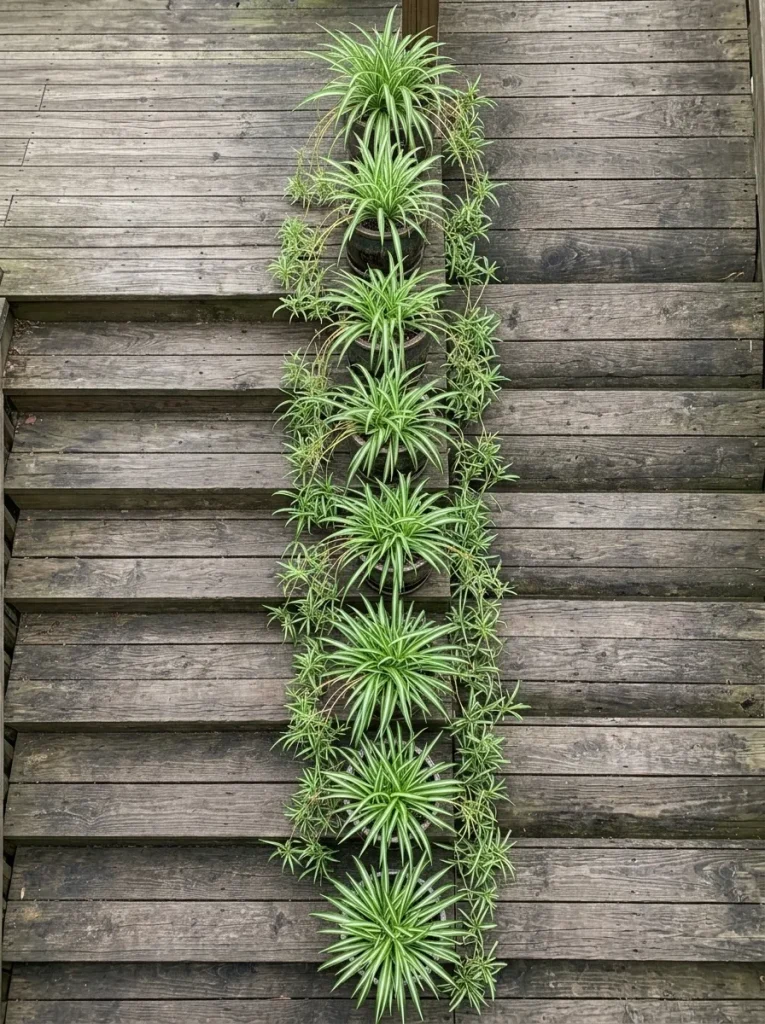
Idea 4: The Elevated Cedar Pedestal Planter Station
Setup Method
Positioning spider plants atop custom-built, elevated cedar pedestal stands creates distinct botanical focal points that draw the eye toward specific outdoor transition zones, such as entryway steps or garden corners. This concept focuses on vertical height variation, clean architectural lines, and structural stability, lifting the arching foliage off floor surfaces to allow cascading plantlets to hang freely without touching the ground. By using rot-resistant cedar timber left untreated to weather into a silvery gray patina, you build a durable outdoor furniture piece that withstands seasonal rain and sun exposure. This arrangement approach keeps plant maintenance highly accessible, placing irrigation and pruning tasks at a comfortable working height for gardeners of all skill levels.
Fabricate a sturdy four-legged pedestal stand measuring thirty-six inches tall out of two-by-two-inch cedar lumber, joining the top framing members with pocket-hole wood screws. Sheet the upper platform deck of the pedestal with three-quarter-inch cedar boards, leaving a half-inch gap between the slats to permit unrestricted water drainage. Sand all exterior wood surfaces smooth with one-hundred-and-twenty-grit sandpaper to remove sharp splinters while preserving the natural timber grain pattern. Place the completed cedar pedestal stand in a sheltered outdoor location, such as a covered porch corner or under a wide roof overhang that receives filtered sunlight. Position a heavy, wide-mouthed glazed ceramic planter filled with a rich, organic potting soil mix directly on top of the cedar pedestal platform. Plant a mature, dense spider plant featuring numerous hanging offsets into the ceramic pot, ensuring the crown sits level with the soil line to promote healthy root growth.