10 Western Birthday Cake Ideas: Chic, Modern Celebration Bakes
For too long, the celebration cake has swung between two disheartening extremes: the fluorescent, crusting-shortening sheet cakes of suburban supermarket aisles and the hyper-engineered fondant monoliths that look spectacular on a screen but taste like chalky sugar paste. Somewhere along the way, we forgot that a birthday cake is, first and foremost, food meant to be gathered around, sliced generously, and devoured with pleasure. The antidote is not a pastry arts degree or an arsenal of specialized turntable jigs. Rather, elevated cake design lies in intentionality, restraint, and an appreciation for raw materials.
A truly memorable centerpiece relies on an artist’s eye rather than technical wizardry. When styling an adult Western-inspired celebration, the goal is never costumey pastiche—there are no plastic boots or fondant lassos here. Instead, we draw from the arresting landscapes of the American West: sun-bleached timber, mineral soils, pressed prairie flora, and the quiet dignity of handmade stoneware. You do not need to reproduce a multi-tiered editorial showstopper crumb for crumb. The secret is simply borrowing a single core principle—a stroke of an offset spatula, a muted ochre wash, or an architectural heap of split figs—and letting that single idea carry the room.
What Makes a Celebration Cake Worth Choosing
High-end cake design is defined by subtraction rather than excess. Where amateur styling piles on glitter, primary colors, and cascading plastic toppers, modern Western entertaining favors the organic warmth of high-desert landscapes and historic homesteads. A thoughtful cake feels rooted in its surroundings, carrying an effortless ease that invites the first cut rather than daring anyone to disturb it.
- Tonal Palette Restraint: Limit your visual field to two or three cohesive, earthy shades. Think raw linen, unrefined terracotta, desert sage, and scorched caramel rather than high-contrast primaries.
- Natural Textures Over High-Gloss Finishes: Replace razor-sharp, mirror-glazed perfection with stucco sweeps, woodgrain striations, or velvet suede finishes that mimic windblown earth and hand-troweled plaster.
- Structural Balance: Embrace deliberate asymmetry. Off-center botanical cascades or single-sided clusters of fruit create dynamic, sculptural interest that feels artful rather than rigid.
- Quality Finishing Elements: Use authentic, organic accents. Untreated copper leaf, botanical-grade blooms, and rough-cut rock sugar honor real materials instead of synthetic novelties.
- Flavor-First Decor: Every visual ornament should hint at what lies beneath the crumb. If a cake features toasted pecans, let the whole, scorched nuts crest the top tier rather than hiding them solely inside the batter.
| Cake Idea | Best For | The Design Detail Worth Borrowing |
| 1. The Semi-Naked Tier with Wildflower Honey Drip | Casual afternoon lawn gatherings | Raw, exposed sponge edges sealed with a glossy, golden-amber natural honey drizzle |
| 2. Pressed Edible Botanical Shortcake | Intimate garden dinners | Flat-pressing untreated field pansies and bachelor’s buttons into silky Swiss meringue |
| 3. Terracotta Ribbed Buttercream | Desert-palette milestone birthdays | Hand-combed horizontal grooves colored with smoked paprika and dusty clay gels |
| 4. Toasted Pecan Naked Sponge with Fresh Figs | Autumn harvest celebrations | Exposed crumb paired with halved black mission figs, raw walnut pieces, and rosemary |
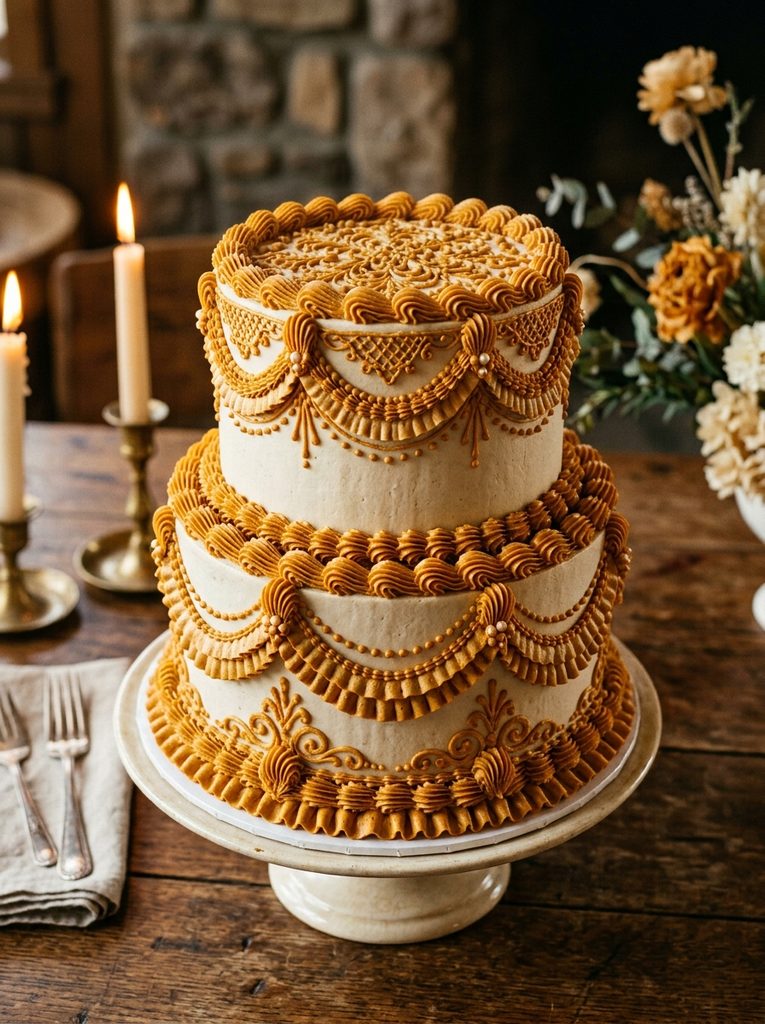
| 5. Vintage Lambeth Ruffles in Warm Ochre | Formal vintage ranch suppers | Victorian over-piped swags reimagined in monochrome shades of burnished saddle and wheat |
| 6. Burnt Sugar & Bourbon Piped Chiffon | Evening fireside soirees | Deep bronze caramelized drips trailing down deeply fluted, open-star buttercream ridges |
| 7. Stucco-Textured Sage & Pinyon Pine | Modern mountain cabin retreats | Rough, troweled frosting in pale lichen green crowned with fragrant, culinary-safe conifer |
| 8. White-on-White Sculpted Suede Buttercream | High-end minimalist celebrations | Architectural monochrome layering that relies entirely on shadow, depth, and matte finishes |
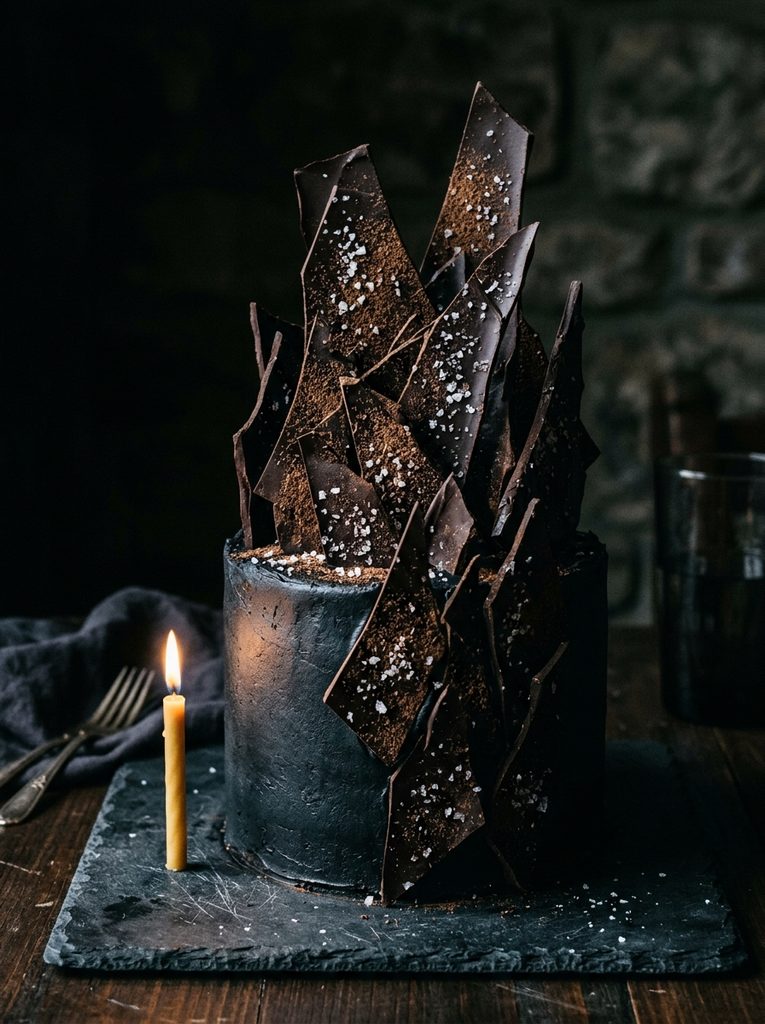
| 9. Dark Chocolate Espresso Shards | Intimate, spirit-forward late dinners | Jagged, tempered single-origin chocolate bark dusted with roasted coffee bean powder |
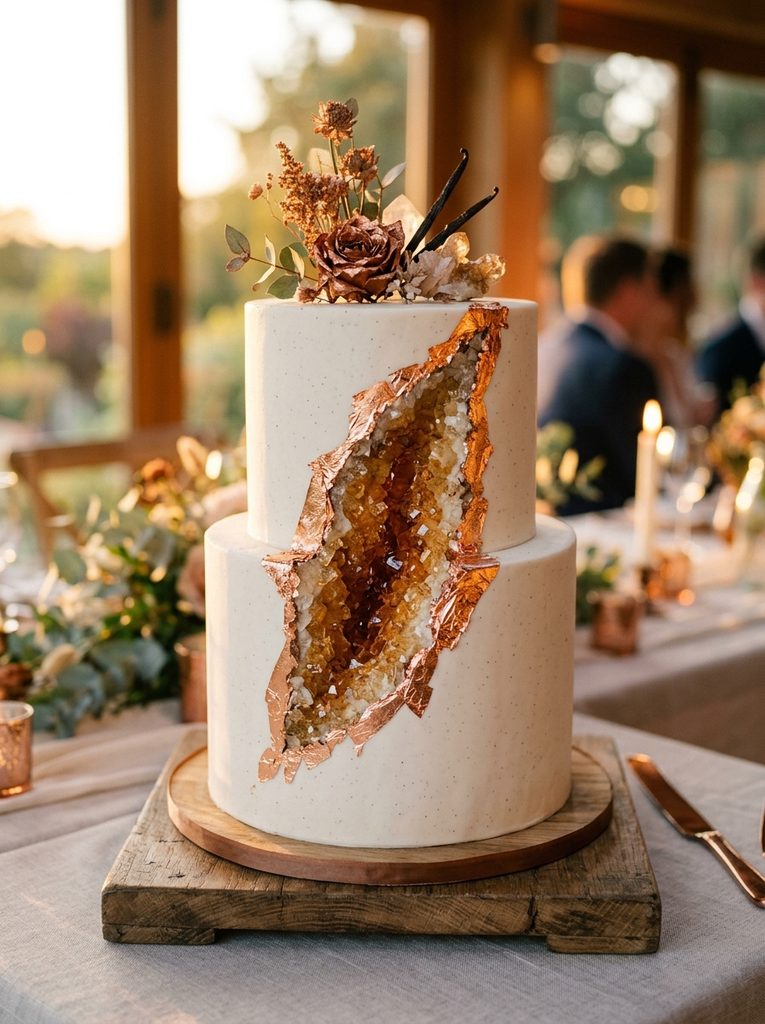
| 10. Copper Leaf & Smoked Vanilla Geode Slice | Golden-hour milestone toasts | Raw interior fissures lined with amber rock sugar and torn sheets of genuine beaten copper |
1. The Semi-Naked Tier with Wildflower Honey Drip
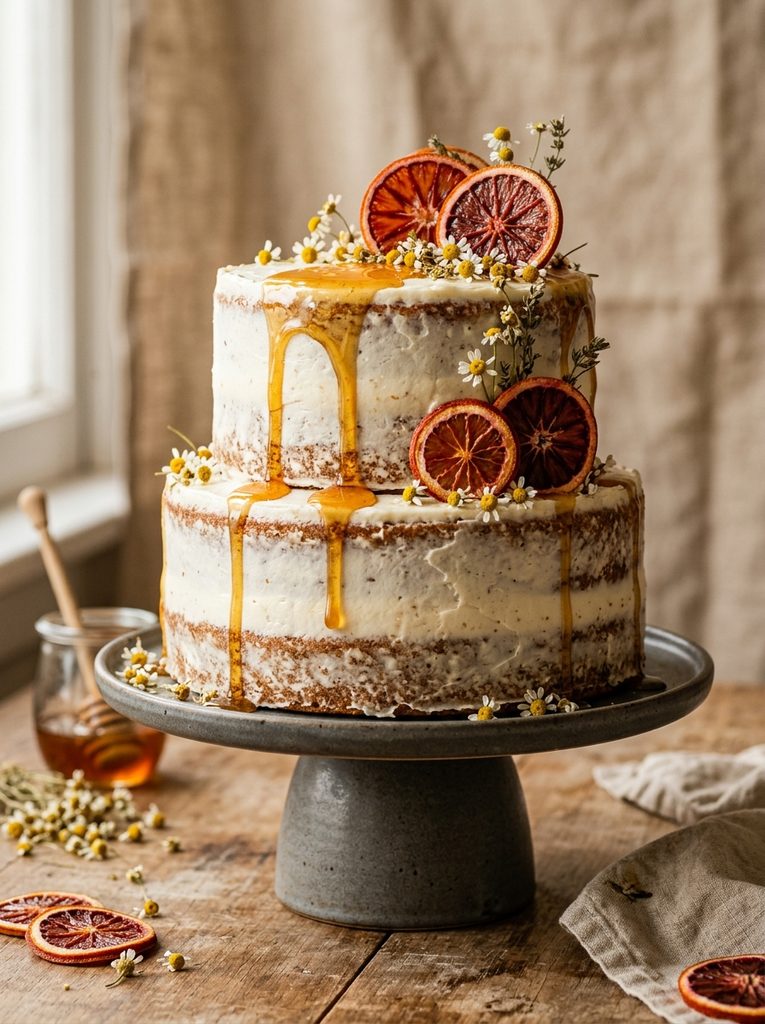
This design pays homage to the unadorned beauty of old homestead kitchens, celebrating the natural architecture of the cake itself. Alternating layers of rich brown-butter crumb and whipped mascarpone frosting are scraped nearly bare around the sides with a stainless-steel bench scraper, leaving the warm, toasted edges of the sponge teasingly visible beneath a sheer veil of white. The star of the presentation is an authentic drip made from raw, unfiltered wildflower honey—gently warmed with a touch of heavy cream to loosen its viscosity—ladled precisely around the crown so it pools and cascades down the flanks in thick, amber ribbons.
Top this rustic canvas with dried chamomile heads, clusters of flowering thyme, and dehydrated slices of blood orange. The juxtaposition of dry, matte crumb against the shimmering, reflective honey drip provides instant visual drama without requiring tedious hours of piping work.
Editor’s Note: Styling tip—avoid processed store honey; its water content causes it to run too thin and dissolve the buttercream. Use raw, thick clover or buckwheat honey brought just to body temperature.
2. Pressed Edible Botanical Shortcake
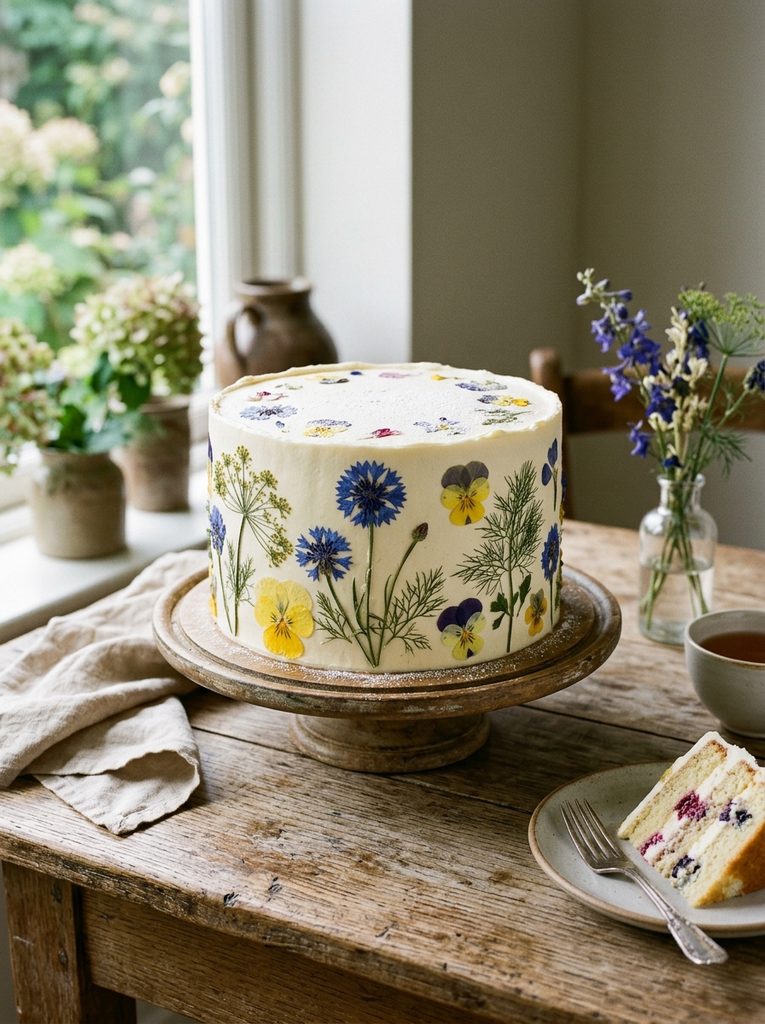
Reminiscent of heritage botanists’ scrapbooks discovered in an attic trunk, this cake treats pasture flora as two-dimensional graphic art. A crisp coat of ivory Swiss meringue buttercream acts as clean vellum for a tapestry of edible flowers that have been gently pressed between parchment sheets for twenty-four hours before application. Cornflowers, miniature yellow violas, purple bachelor’s buttons, and delicate dill fronds are smoothed directly onto the freshly chilled frosting, their petals and leaves adhered flat against the sides.
The aesthetic is wild and botanical, evoking the untamed spring meadows of the Rocky Mountain foothills. Pair this delicate exterior with a base of tender cornmeal shortcake layered with macerated blackberries and lemon verbena curd. The resulting slice is grounded, aromatic, and effortlessly chic.
Editor’s Note: Color note—press your blooms between paper towels weighted with a heavy cast-iron skillet to preserve the vividness of the natural anthocyanin pigments without browning.
3. Terracotta Ribbed Buttercream
Drawing straight from the red rock canyons of the American Southwest, this single-tier or stacked bake relies entirely on sculptural rhythm and warm earth tones. Tint your buttercream using natural gel paste blended with a pinch of Dutch-process cocoa powder to achieve an authentic, sun-baked clay tone: think muted rust, dusty sienna, and warm canyon terracotta. After applying an even coat of frosting, use a notched acrylic decorating comb or the rounded tines of a vintage silver fork to carve continuous horizontal ribs around the circumference as the turntable spins.
The resulting horizontal ridges capture the low-raking light of dinner candles, casting gentle shadows that give the cake an architectural presence. Finish the top with a simple grouping of dried seed pods, pale seedhead grasses, and a solitary dried protea bloom.
| Celebration Setting | Frosting & Base Pairing | Why the Design Works |
| Adobe Courtyard Sunset Gathering | Toasted Coriander Sponge with Salted Dulce de Leche Buttercream | Clay tones echo natural brick and desert soil, holding up against golden-hour light. |
| Modern Ranch Dining Room | Smoked Cardamom Dark Chocolate with Spiced Praline Buttercream | High-contrast ribbed textures mirror mid-century wood paneling and raw leather details. |
| Open-Air Canvas Tent Glamping | Vanilla Bean Buttermilk Cake with Roasted Peach Cream | The earthy exterior creates an unexpected, sophisticated contrast with bright summer fruit. |
Editor’s Note: Piping tip—run your metal decorating comb under scalding hot water and wipe it dry immediately before carving the ridges into the chilled cake for perfectly crisp, drag-free lines.
4. Toasted Pecan Naked Sponge with Fresh Figs
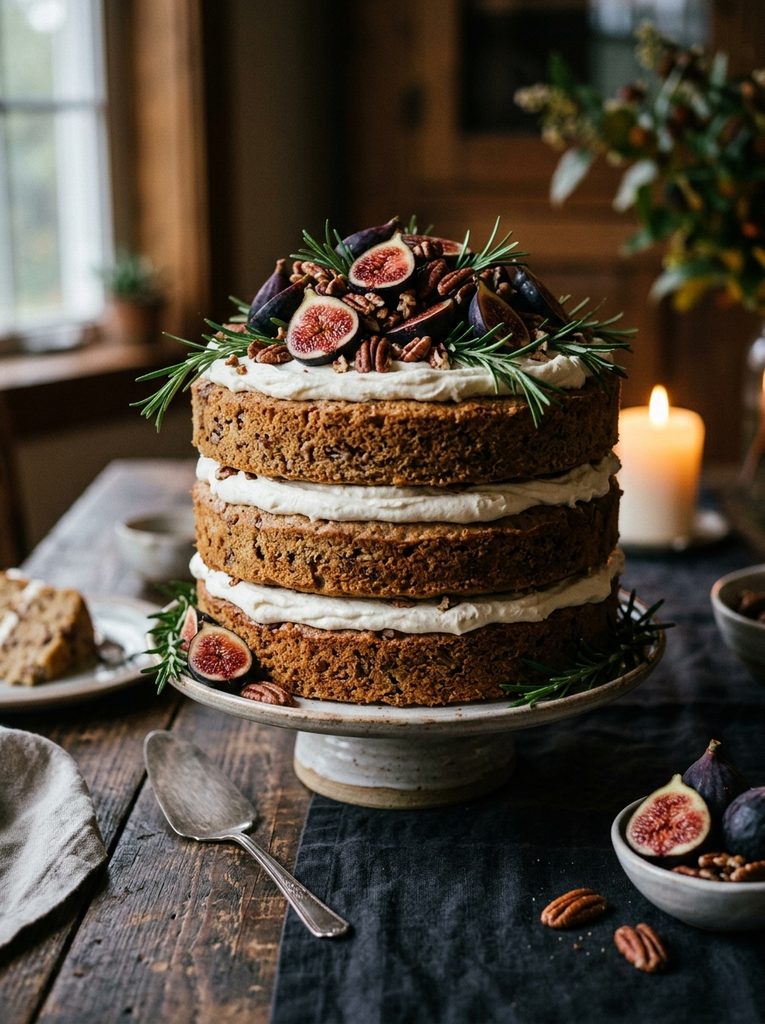
This composition abandons exterior frosting altogether, relying entirely on the honest abundance of an autumnal harvest. Three generous discs of pecan-studded sour cream cake are stacked high, separated only by pillowy clouds of cream cheese frosting whipped with pure maple syrup. The sides are left completely exposed, showcasing the deep hazelnut-brown crumb and the suspended pieces of chopped, toasted nuts embedded within the sponge.
The summit is where the artistry lives: a dense, overflowing heap of fresh Black Mission and Kadota figs—some sliced lengthwise to reveal their intricate crimson seed cavities, others torn open roughly by hand—interspersed with raw pecan halves, small sprigs of garden rosemary, and clusters of small blue-black elderberries. It is an arrangement that feels gathered rather than manufactured, evoking a luxurious, fireside feast on an expansive timber porch.
Editor’s Note: Styling tip—brush the cut surfaces of the figs with a micro-thin layer of apricot jam glaze to seal in moisture and give them an irresistible, jewel-like gleam under party lighting.
5. Vintage Lambeth Ruffles in Warm Ochre
Traditional Lambeth over-piping—an intricate Victorian technique that layers delicate borders over one another—finds a surprisingly modern home in Western design when stripped of its pastel wedding associations. Base the cake in a matte, sun-bleached linen hue, then break out traditional metal piping tips (open star tip #18 and leaf tip #352) to create dramatic baroque swags, scalloped borders, and drop lines around the tiers. The transformative twist is the color story: execute all the ruffles in a single, deeply saturated warm ochre or burnished saddle-leather tone.
The monochromatic warmth neutralizes the fussy, bridal nature of the piping, turning it into an homage to vintage hand-tooled leather, antique saddlery, and historic frontier saloon mirrors. Inside, match this vintage swagger with a rich bourbon spice cake laced with dark molasses and cracked black pepper.
Editor’s Note: Piping tip—maintain a colder frosting temperature than usual when piping Lambeth details; if the butter warms from your hands, the delicate scallops will sag and lose their sharp definition.

6. Burnt Sugar & Bourbon Piped Chiffon
For celebrations that linger well past midnight, this bake delivers deep, brooding indulgence through bold, gestural piping. The foundation is a tall, featherlight bourbon chiffon cake enrobed in a smooth, toasted-marshmallow buttercream. Using an extra-large French open star tip (such as an Ateco #8B), pipe bold, dramatic vertical flutes that travel from the baseboard to the crown in unbroken, sweeping pillars. Once the cake is chilled to firmness, spoon an artisanal burnt-sugar caramel over the top.
Allow the dark, glossy syrup to pool in the center before it breaks through the crenellations of the piped peaks, cascading in slender, dark bronze rivulets down the recessed valleys of the frosting. The visual effect is kinetic and dramatic, capturing the rugged, unapologetic spirit of a barrel-strength whiskey tasting.
Editor’s Note: Color note—cook your sugar past the golden stage until it turns a deep, mahogany amber with hints of bitter smoke; this keeps the drip visually distinct from light, generic caramel.
7. Stucco-Textured Sage & Pinyon Pine
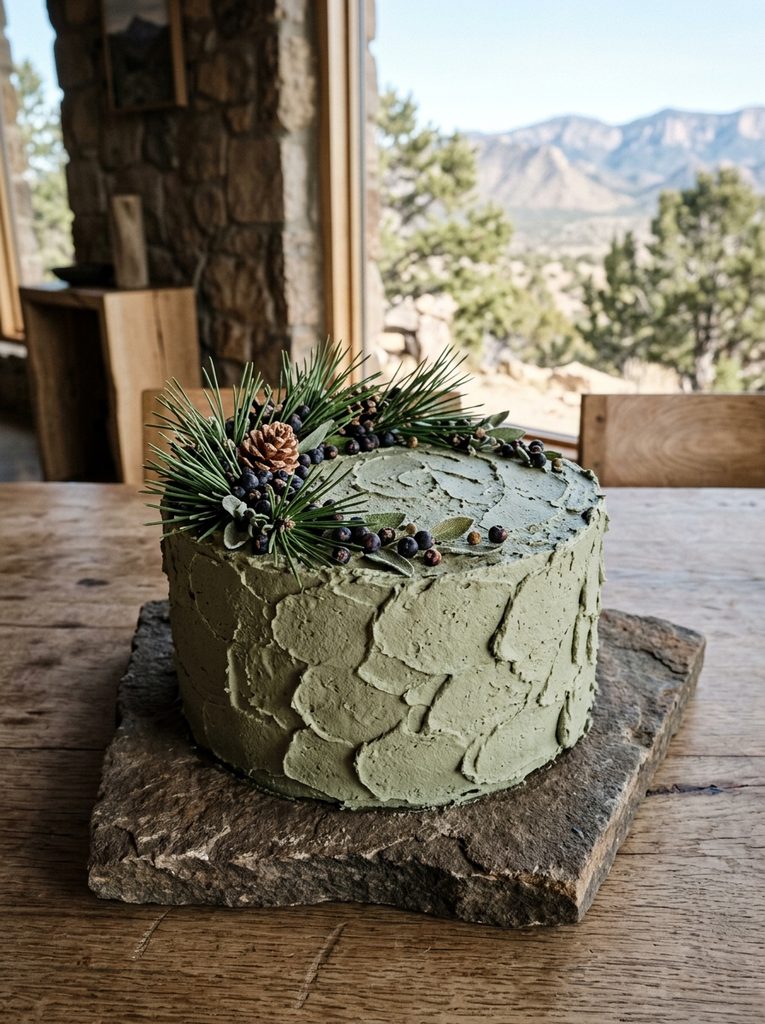
Transport your guests to the high desert plateaus with a cake that captures the quiet majesty of native brush and weathered mountain masonry. The exterior frosting is colored a soft, muted lichen sage using a microscopic blend of matcha powder and avocado green gel. Rather than smoothing the surface with a scraper, use a short, rounded offset spatula to apply the frosting in deliberate, overlapping, crosshatch strokes, mimicking the organic plaster texture of historic mission walls.
The top perimeter is adorned with an asymmetrical crescent of culinary-safe botanicals: small sprigs of fresh pinyon pine needles, silvery sage leaves, dried juniper berries, and small cracked pine nuts. The clean pine and herbal oils infuse a woodsy fragrance into the air the moment the cake box is opened, promising an unforgettable sensory experience.
You Might Also Like

Editor’s Note: Styling tip—source your pine strictly from food-safe, culinary-certified pinyon or rosemary varieties; never harvest unidentified decorative garden conifers, which can be bitter or toxic.
8. White-on-White Sculpted Suede Buttercream
Monochrome minimalism is the pinnacle of contemporary Western luxury. This design avoids color entirely, trusting texture, shadow, and architectural depth to create a stunning presence. Coat the cake in an ultra-pale, unbleached ivory buttercream made with clarified butter or white food coloring to neutralize yellow undertones. Once set, apply a secondary layer using a stiff-bristled pastry brush or a crumpled ball of parchment paper, dabbing the surface to create a matte, napped finish reminiscent of raw calfskin or buckskin suede.
On this textural plane, mount geometric, curved ribbons of thinly rolled white modeling chocolate or wafer paper that rise from the top tier like windblown canyon dunes. It is quiet, confident, and stunningly modern.
| Celebration Setting | Frosting & Base Pairing | Why the Design Works |
| High-Desert Art Gallery Reception | White Velvet Vanilla Bean with Tart Yuzu Curd | Clean geometric white lines mirror contemporary gallery walls and curated sculpture spaces. |
| Minimalist Mountain Lodge | Brown Butter Almond Cake with Amaretto Buttercream | Suede texture provides warmth against cold stone fireplaces and oversized raw-timber beams. |
| Sunlit Glass Greenhouse Lunch | Champagne Sponge with Whipped Goat Cheese & Fig Jam | The stark ivory silhouette cuts through lush greenery and bright, overhead sun exposure. |
Editor’s Note: Styling tip—chill the cake for at least forty-five minutes before applying your suede texture tool; if the frosting is tacky, the parchment will tear away chunks rather than leaving an even, napped imprint.
9. Dark Chocolate Espresso Shards
Evoking the jagged, obsidian geology of volcanic mountain ranges, this design is dark, moody, and undeniably adult. Enrobe a dense, four-layer espresso-soaked devil’s food cake in a velvety dark chocolate ganache tinted to a deep midnight charcoal. The decorative architecture comes from hand-broken chocolate bark: temper high-percentage dark chocolate, spread it razor-thin across an acetate sheet, dust it generously with ground espresso beans and coarse sea salt flakes, and snap it into tall, asymmetrical shards once set.
Drive these sharp, angular chocolate shards vertically into the crown of the cake at varying angles, creating an abstract crown of stone-like crystals. The look is dynamic, masculine, and unapologetically dramatic, catching room light on its fractured, glossy planes.
Editor’s Note: Piping tip—temper your chocolate correctly using seed crystals to ensure the shards hold their snap at room temperature and do not soften or bloom when touched.

10. Copper Leaf & Smoked Vanilla Geode Slice
Gold leaf has dominated dessert design for a decade, but copper carries an earthy, industrial warmth that feels inherently suited to Western luxury. This striking cake begins with a base of smoked vanilla bean buttercream—flecked with dark vanilla caviar—smoothed to porcelain-like straightness. Cut an intentional, jagged fissure into the side of the top tier to reveal a faux “geode” core composed of edible amber crystal rock sugar, hand-painted with diluted cocoa butter and almond extract.
Frame the rough opening with delicate, hand-torn fragments of genuine culinary copper leaf using a clean, dry camel-hair brush. The copper glints against the matte ivory canvas, evoking the rich mining heritage of the Rocky Mountains while remaining firmly in the realm of high-end edible sculpture.
Editor’s Note: Styling tip—use a drop of clear spirit like vodka to adhere the copper leaf; water will dissolve the sugar crystals beneath and cause the delicate metallic sheets to turn gummy.
Copy the Principle, Not the Exact Cake
The greatest source of kitchen anxiety when executing a celebration cake is the belief that you must replicate a magazine photograph millimeter for millimeter. When home bakers attempt to recreate an elaborate bakery piece wholesale, they run directly into hidden structural obstacles: commercial blast chillers, industrial fondants, stabilizing starches, and years of daily muscle memory with an offset spatula.
The secret to effortless entertaining is breaking down a showpiece into its foundational aesthetic principles and borrowing only the element that serves your skills and schedule. If a cake captivates you with its stucco plaster finish, apply that single spatula technique to a simple box-mix yellow cake enrobed in your favorite standard frosting. If you love the dramatic height of chocolate shards, embed them into a casual flat sheet cake instead of building an unstable four-tier tower. By lifting only the governing idea, you achieve high-end editorial sophistication while leaving performance anxiety behind.
| Instead of Copying This Complex Element | Borrow This Practical Principle Instead |
| Multi-tiered structural doweling and stacking | Stack a single, extra-tall two-layer cake on an elevated, weighted stone pedestal. |
| Pencil-thin, razor-sharp fondant edges | Embrace an organic, deckled rim by leaving the natural buttercream lip standing at the cake’s top crown. |
| Airbrushed ombre food-color gradients | Tint small bowls of frosting in varying shades of one earth tone and swipe them casually around the base with a butter knife. |
| Elaborate wired sugar-gum flower sprays | Drop a single cluster of genuine, organic fresh figs, split open by hand and nestled alongside garden rosemary. |
| Chiseled geode cavities with cast isomalt | Pile rough, natural rock-candy sugar in an asymmetrical half-moon around the top edge of your frosting. |
Build Your Own Celebration Formula
You don’t need to reinvent the wheel every time a birthday arrives on the calendar. By adopting the same styling formula used by seasoned food stylists, you can assemble endless permutations of elegant, Western-inspired bakes on a whim.
Keep this dependable structural equation close at hand:
$$\text{Solid structural base} + \text{restrained color story} + \text{tactile texture} + \text{one organic finishing accent}$$
Start by baking a sturdy, delicious cake base (such as an oil-based chiffon or an almond-flour brown butter sponge) that can hold its shape comfortably at room temperature. Select your palette with monastic discipline: choose one neutral tone (linen, cream, stone) and one saturated ground color (terracotta, sage, warm ochre, burnt umber). Apply your frosting with intent, giving it a tangible, tactile surface—whether combed, stippled, or intentionally scraped bare. Finally, stop decorating after adding precisely one organic flourish: a scattering of pressed wildflowers, a drift of broken chocolate shards, or a handful of fresh mountain herbs.
Step back, resist the urge to add “just one more thing,” and trust the power of restraint. When you celebrate the materials, the flavor, and the hand of the maker, you create something far more meaningful than bakery perfection: an edible centerpiece that welcomes your guests with beauty, warmth, and grace.
Frequently Asked Questions
What are the best design styles for an adult Western-themed birthday cake?
The key to styling an adult Western celebration cake is avoiding literal kitsch. Trade in boots, horseshoes, and blue-and-red bandana prints for elements drawn from the landscape, architecture, and craft traditions of the region. Focus on architectural stucco textures reminiscent of adobe haciendas, warm earth-mineral color palettes (terracotta, sandstone, sagebrush, ochre), and unrefined natural materials like copper leaf, torn black figs, and pressed prairie wildflowers. A semi-naked cake drizzled with artisanal raw honey or an ivory tiered bake topped with clean cedar greens communicates the soul of the West through quiet sophistication.
How can I make a store-bought or boxed cake look like an artisan bakery piece?
Elevating a basic cake comes down to surface re-engineering. If working with a plain, smooth store-bought cake, use an offset spatula or the back of a soup spoon to roughly texture the cold outer frosting into an organic stucco or swirled linen finish. If baking from a box, swap the vegetable oil for melted browned butter, substitute milk for water, and add an extra egg yolk to produce a sturdy, bakery-grade crumb. Once baked, scrape the sides down to a “semi-naked” finish using a flat metal bench scraper, and discard artificial sprinkles in favor of natural garnishes like dried citrus wheels, fresh rosemary, or rough-cut chocolate bark dusted with flaky sea salt.
Which edible flowers and botanicals are actually safe and practical to use?
Never source flowers from a standard florist, supermarket floral aisle, or roadside ditch; these are regularly treated with chemical pesticides and systemic preservatives unfit for ingestion. Source certified culinary-grade blooms from organic farms or harvest them from your own untreated garden. Pansies, violas, bachelor’s buttons, nasturtiums, borage, calendula, and chamomile are safe, visually striking, and press easily. When incorporating woodsy foliage, use culinary rosemary, flowering thyme, or culinary-grade pinyon pine. Always wrap the cut stems of non-edible decorative blooms in floral tape before inserting them into a cake, ensuring raw plant juices never leach into the crumb.
How do I keep textured buttercream from melting or sagging at an outdoor party?
Temperature discipline is vital for outdoor gatherings. Always frost with a high-ratio Swiss meringue or Italian meringue buttercream; the cooked egg-white matrix provides far superior structural stability compared to basic American butter-and-powdered-sugar frostings. Chill the assembled and textured cake in the refrigerator for at least two hours until the butter structure is rock-solid before transporting it outdoors. Position the dessert table in total, deep shade—never in direct sunlight or under a radiant canvas tent ceiling. If temperatures exceed 80°F, keep the cake safely refrigerated indoors, bringing it out for the toast and candle-lighting just ten minutes before serving.
What simple piping techniques add high-end polish without professional tools?
You can create high-end visual finishes using the simplest kitchen utensils without owning professional piping tips. The back of a warm dessert spoon can be swirled through freshly applied frosting to create an artisanal plaster effect. Dragging the tines of an ordinary dinner fork around the sides of a spinning cake table produces clean horizontal ribs. If you purchase just one piping tool, make it a large French open star tip (#8B or #869). A single, continuous vertical pull with this tip creates a crisp, deeply fluted architectural column that instantly turns an ordinary home bake into a gallery piece.

Visual inspiration, practical ideas and editorial stories for everyday living.
Leave a Comment