2. Quiet Structural Art: The Solitary Tonga Disc & Shadowbox Kuba Textiles
Minimalism often falters when it comes to wall decor, either leaving surfaces cold and clinical or resorting to generic, flat modern art prints. In an Afrohemian minimalist space, wall art relies on three-dimensional, shadow-casting organic relief. By hanging a single, monumental handcrafted object rather than a dense salon-style gallery wall, you introduce cultural storytelling while preserving serene negative space.
Picture a quiet living room with nine-foot walls finished in a soft, warm chalk-white lime wash. Centered above a low, floating walnut media console hangs a single, extraordinary 32-inch vintage Tonga basket handwoven from wild ilala palm leaves by Zimbabwean artisans. Rather than clustering a dozen small baskets together, this solitary piece acts as a dimensional wall medallion. Its tight chevron weave and subtle dark brown bark-dyed rim catch the changing natural daylight, casting a soft, graphic shadow against the textured plaster wall.
On the opposite wall, an authentic 18×24-inch fragment of vintage Congolese Kuba cloth—embroidered with raised, velvet-cut raffia pile in warm fawn, cocoa, and cream—is mounted inside a simple, custom-matted matte black shadowbox frame. The rough, unraveled edges of the raffia float over a generous three-inch border of textured oatmeal linen. The composition is restrained, museum-like, and profoundly calm, celebrating the weaver’s technique without cluttering the visual field.
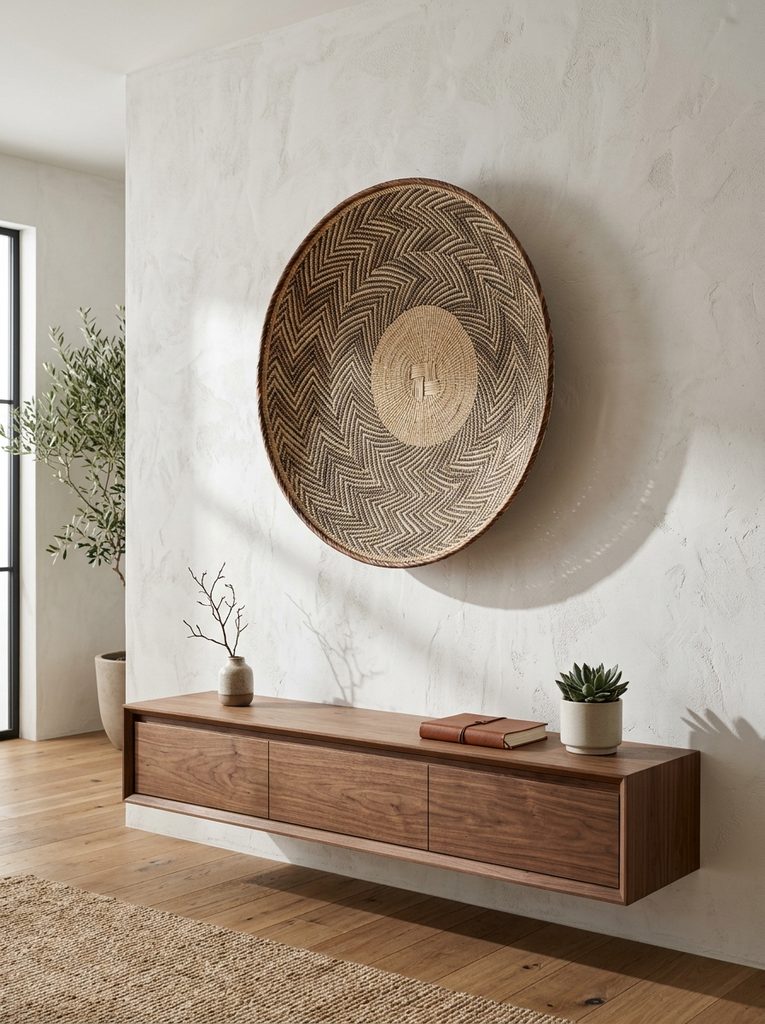
Art Placement Note: Mount statement wall pieces so their visual center sits at eye level (roughly 58 to 60 inches from the finished floor). Resist the urge to flank a large sculptural piece with secondary art; letting empty wall space surround an artisanal artifact gives it room to breathe and commands visual respect.