2. The Textured Monochromes: Kuba Cloth Cut-Pile & Carved Bamileke Timber
If your personal aesthetic leans toward calming neutrals, Scandinavian simplicity, or clean mid-century modern lines, you might hesitate to invite bold pattern into your space. Enter the textured monochrome palette. By pairing the mathematical complexity of Congolese Kuba raffia cloth with the structural shadows of a hand-carved Cameroonian Bamileke spider table, you can create breathtaking visual rhythm without introducing a single neon pigment.
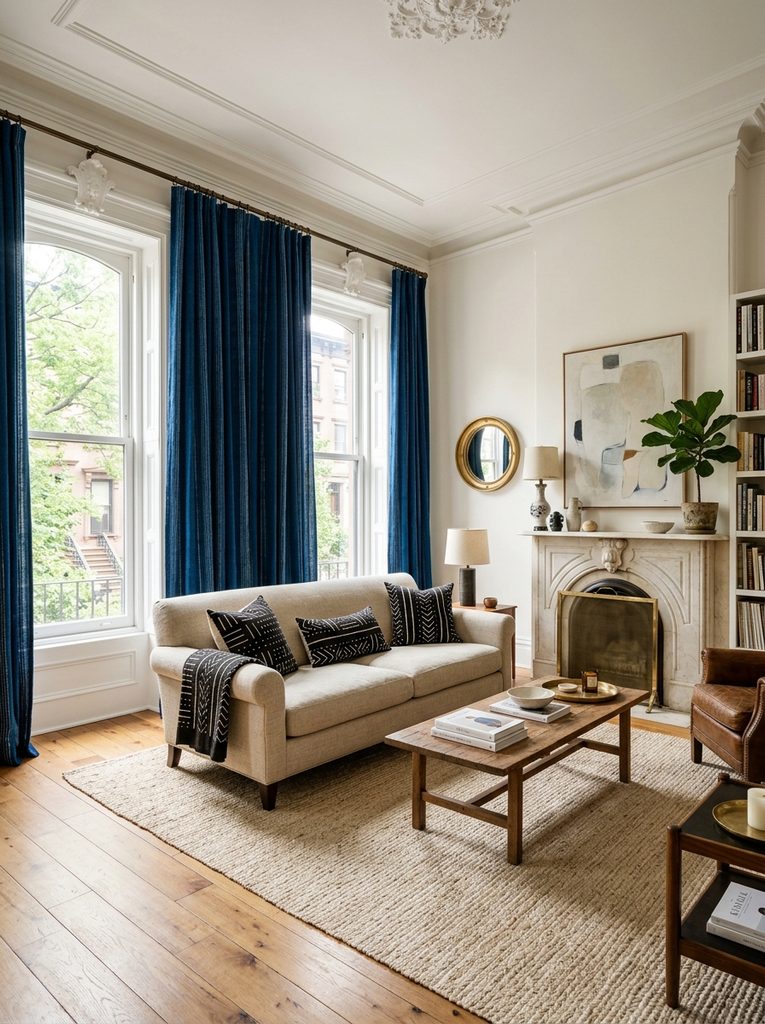
Picture a spacious living room centered around a clean-lined caramel top-grain leather sofa. Rather than a flat, predictable patterned area rug, the floor is grounded by an undyed, thick wool bouclé rug in ivory. Rising from the center is an authentic Bamileke drum coffee table carved from a single trunk of solid teak, finished in a matte, deeply stained ebonized black. The carved relief pattern—an open lattice inspired by ancestral web motifs—casts striking, geometric shadows across the floorboards throughout the day.
To bridge the dark timber with the warm leather, the sofa features a long lumbar pillow crafted from antique Kuba cloth. The geometric maze-like appliqués and raised cut-pile velvet textures of the raffia introduce complex, layered dimensions. The patterns are dense, ancient, and intricate, yet because the colors stay firmly within the realm of wheat, raw sisal, tobacco, and espresso, the room reads as an exercise in serene, worldly luxury.
| Situation / Use Case | Base Elements | Why It Works |
|---|---|---|
| Subdued Neutral Refresh | Caramel leather sofa, ebonized Bamileke table, cream bouclé rug | High texture replaces high saturation, letting dramatic shadow patterns define the space without visual noise. |
| Compact Urban Living Room | Low linen settee, nested carved timber stools, natural woven blinds | Keeps the footprint airy while the sculptural woodwork adds grounding historic weight. |
Scale balance tip: Because authentic Kuba cloth is stiff due to its natural palm leaf fiber construction, avoid using it for deep-seated cushions where your neck or shoulders rest. Position it strictly as an accent piece, such as a statement lumbar support or framed as textile wall art under museum glass.