Corner spaces are often overlooked in interior planning, yet they hold strong potential for improving both function and visual balance in a room. Corner wall decor focuses on transforming these unused areas into structured, intentional design features that support overall home decor. On Pinterest, corner styling has become a consistent source of inspiration because it allows small or awkward spaces to become practical and visually appealing without requiring major renovation. This topic explores how corners can be used for decoration, storage, lighting, and creative focal points while maintaining harmony with modern design and minimalist style principles. Readers will learn how to approach corner decoration using structured methods that include material selection, layout planning, and step-by-step execution. Each idea is designed to be beginner friendly while still producing a professional result. The focus remains on practical application, where simple adjustments can create meaningful improvements in organization and aesthetic appeal. Whether working with a living room, bedroom, office, or hallway, corner wall decor offers flexible solutions that enhance spatial efficiency and introduce creative ideas into everyday interiors.
Why This Idea Is Trending or Useful
Corner wall decor has become widely popular because it addresses a common interior design challenge: unused or visually unbalanced spaces. Modern homes and apartments often include corners that remain empty or underutilized, creating missed opportunities for organization and decoration. Pinterest ideas frequently highlight corner solutions because they provide both aesthetic improvement and functional benefits. This approach supports DIY creativity, allowing individuals to personalize their spaces without complex construction work. Corner styling is also aligned with budget ideas since most solutions require minimal materials and simple installation. Another reason for its popularity is adaptability. Corner decor works in small rooms, large spaces, and irregular layouts, making it a flexible design method. It also fits well with minimalist style and modern design trends where intentional placement of objects is preferred over cluttered decoration. Beginners can easily follow structured tutorials to create effective results using basic tools and accessible materials. This combination of practicality, creativity, and visual improvement makes corner wall decor a trending topic in home decor inspiration across digital platforms.
Materials and Preparation
Successful corner wall decor projects begin with careful preparation and proper material selection. Common materials include wall-mounted shelves, wooden panels, decorative frames, LED lighting strips, hooks, small planters, adhesive mounts, and lightweight storage units. Tools typically include measuring tape, pencil, level tool, drill or adhesive supports, screws, wall anchors, and cleaning cloths. Before starting any project, the corner area should be cleaned and inspected for wall condition, including surface smoothness and structural stability. Accurate measurement is essential because corner spaces often have unique dimensions that affect installation alignment. Planning should include determining the purpose of the corner, whether decorative, functional, or combined. Lighting conditions should also be evaluated since natural and artificial light influence how decor elements appear. Layout sketches can help visualize placement and avoid overcrowding. Organizing all materials in advance ensures smooth execution without interruptions. Many Pinterest ideas emphasize starting with a clear focal point to guide the rest of the design. Proper preparation reduces installation errors and ensures a balanced final result that integrates naturally with surrounding home decor elements.
Idea 1: Floating Corner Shelf Display
How to Create
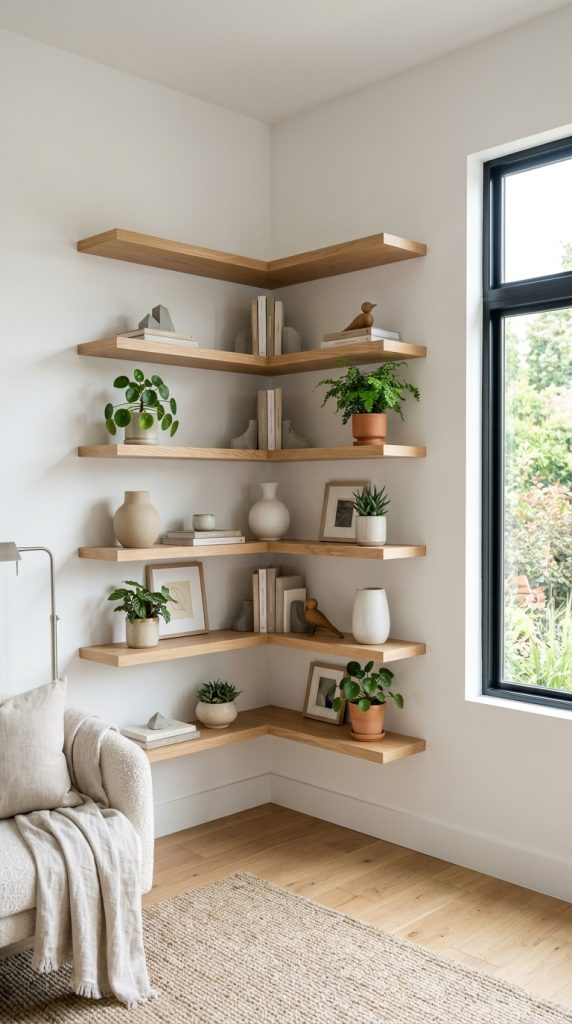
Floating corner shelves transform empty wall intersections into structured display areas that support both decoration and organization. These shelves create visual layering by using vertical space efficiently, making them suitable for small rooms and compact interiors. The design works well with modern design and minimalist style concepts because it maintains a clean structure while offering functional storage. Floating shelves can hold decorative items such as books, small plants, candles, and framed art pieces. When arranged correctly, they create a balanced composition that draws attention to the corner without overwhelming the space. Pinterest ideas often highlight floating shelves because they combine simplicity with high visual impact. The open structure allows flexibility in arrangement, making it easy to update or modify decor over time. This type of corner wall decor also supports organization by reducing clutter on main surfaces while keeping frequently used items accessible.
Creating floating corner shelves begins with selecting a suitable corner that has enough vertical space for layered installation. Measure both walls carefully and mark alignment points using a level tool. Install brackets or mounting supports securely into the wall, ensuring they can handle the intended weight. Attach shelf boards carefully, starting from the bottom layer and moving upward. Maintain equal spacing between shelves to preserve visual balance. Once installed, arrange items by size and color to maintain a cohesive appearance. Avoid overcrowding the shelves to preserve a clean aesthetic. Regular adjustment of displayed items helps maintain freshness and visual harmony. This step by step approach creates a practical and stylish corner feature that enhances both storage and home decor.