Designing a decorated screened porch converts an ordinary outdoor architectural feature into a comfortable, weather-protected extension of your primary indoor living space. A well-planned screened porch provides essential defense against insects, harsh direct sunlight, and wind-blown debris while maintaining open ventilation and outdoor visibility. In this detailed tutorial, readers will explore ten distinct aesthetic themes, furniture layouts, and structural organization methods specifically tailored for modern screened porch transformations. You will learn how to choose weather-resistant textiles, arrange durable outdoor seating, integrate ambient lighting systems, and select low-maintenance indoor-outdoor decor elements. Mastering these practical decoration strategies helps elevate basic timber structures into inviting spaces suitable for year-round lounging, dining, and entertaining guests. Whether you are aiming to build a minimalist retreat, a cozy rustic lounge, or a botanical sunroom, these step by step creative ideas provide actionable inspiration to turn your planning ideas into a practical home decor reality.
Why Screened Porch Decorating Is Trending and Useful
Screened porch transformations remain immensely popular across modern Pinterest ideas and home improvement boards because they offer high practical value and strong design relevance. From a functional standpoint, a screened enclosure bridges the gap between indoor comfort and outdoor atmosphere, allowing homeowners to enjoy fresh air without suffering from seasonal pests or unpredictable weather changes. This DIY decoration trend holds significant appeal for beginners due to the ease of staging pre-assembled weather-resistant furniture, hanging sheer outdoor curtains, and arranging container plants. Incorporating thoughtfully styled furniture and organization systems increases usable residential floor space, effectively adding a secondary living room or outdoor dining zone to your property layout. By applying budget ideas, smart space planning, and trending ideas like textured rattan, neutral color palettes, and cozy ambient lanterns, homeowners can execute a high-impact creative project that boosts overall property aesthetic and daily quality of life.
Materials, Preparation, and Spatial Planning
Executing a successful screened porch decorating project requires thorough site preparation, precise spatial measurements, and strategic material selection before purchasing decor accessories. Essential materials include all-weather wicker or teak furniture frames, outdoor performance fabric cushions, synthetic polypropylene area rugs, hanging planter hardware, and exterior-rated string lights. Important tools for installation comprise a tape measure, cordless power drill, spirit level, wall anchors, tape, and heavy-duty scissors. Prior to placing furniture, thoroughly clean the porch floor and mesh screens using a mild detergent, soft brush, and water hose to remove seasonal dirt, pollen, and cobwebs. Measure the complete floor plan and sketch a clear layout map, ensuring you reserve unblocked walking pathways between access doors. Choosing mildew-resistant fabrics and powder-coated metal fixtures guarantees that your handmade styling arrangements withstand temperature changes, ambient humidity, and daily physical wear while keeping maintenance simple and manageable.
Ten Practical Design Concepts for Screened Porches
Idea 1: Scandinavian Minimalist Neutral Lounge
Execution Process
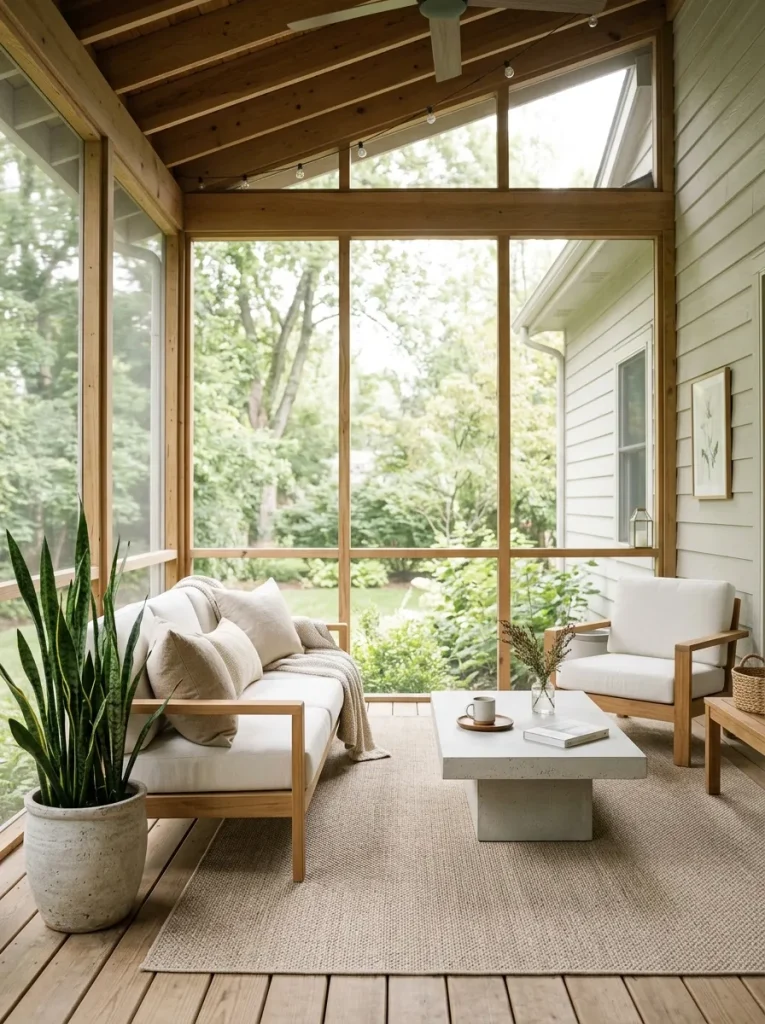
The Scandinavian minimalist lounge concept focuses on clean structural lines, muted neutral color schemes, and uncluttered spatial arrangements that promote visual tranquility. This design style utilizes light-toned wooden furniture frames, such as blonde teak or pale ash, paired with crisp white or cream performance fabric cushions. By avoiding heavy ornamental clutter, the minimalist layout emphasizes natural surrounding light and surrounding greenery viewed through the clear porch mesh screens. A large off-white outdoor area rug crafted from woven synthetic fibers anchors the central seating group, creating a soft tactile surface underfoot without trapping ambient moisture. Low-profile coffee tables featuring smooth stone or concrete tops complement the geometric furniture forms, establishing an uncluttered aesthetic balance. This beginner friendly design approach makes small or narrow screened porches feel noticeably larger, brighter, and more orderly while providing a calm environment dedicated to everyday relaxation.
Constructing this Scandinavian layout begins with laying a flat, weather-resistant cream polypropylene rug over the thoroughly cleaned porch floor. Position a sleek, pale teak wood sofa along the longest solid wall of the porch, ensuring the back frame does not block window or screen views. Flank the main sofa with two matching low-profile armchair frames angled inward to create a comfortable, conversational seating semicircle. Place a low, rectangular light grey concrete coffee table in the center of the rug, leaving at least eighteen inches of walking clearance on all sides. Top the sofa cushions with a few muted beige linen accent pillows and a lightweight woven throw blanket neatly folded over one armrest. Complete the arrangement by placing a single large white ceramic planter holding a tall snake plant in the corner to introduce subtle organic height without disrupting the room’s clean visual lines.