10 Mudcloth Living Room Decor Ideas
Designing an expressive living environment requires incorporating traditional textile patterns that balance global character with relaxed modern comfort. Exploring curated Pinterest ideas helps bridge the gap between rich ethnic heritage fabrics and clean contemporary interior layouts. This comprehensive guide details ten distinct approaches for styling authentic mudcloth textiles to achieve a harmonious, art-filled living room atmosphere. Readers will learn how to layer geometric patterns, choose complementary neutral palettes, and scale fabric applications to maximize visual impact without cluttering seating areas. Understanding these styling methods proves exceptionally useful because patterned cotton cloth serves as a versatile foundation that ties mismatched vintage furniture elements together. Whether you are embarking on an easy project to revitalize a bare sofa or planning a complete room overhaul, this resource provides actionable guidance. By mastering these techniques, anyone can cultivate an inviting, expressive environment that feels intentionally designed yet effortlessly lived-in and natural.
Why This Idea Is Trending or Useful
The widespread popularity of this mudcloth styling trend stems from its unique ability to blend maximalist cultural warmth with intentional, curated spatial planning. From a practical standpoint, incorporating heavy hand-dyed cotton textiles introduces tactile richness while softening the rigid architectural lines common in contemporary homes. The DIY appeal remains exceptionally high because homeowners can easily sew pillow covers, wrap canvases, and reupholster furniture elements without expensive investments. Accessibility for beginners is built into the core philosophy, allowing decorators to experiment with bold geometric patterns and monochrome palettes without feeling overwhelmed by complex color theory. Furthermore, the design relevance of combining organic cotton weaves, leather accents, and raw wood furniture ensures that living rooms feel grounded, vibrant, and deeply personal. Embracing these trending ideas allows individuals to express their personal narrative through handmade decoration, turning ordinary seating areas into stunning visual showcases.
Materials and Preparation Strategies for Success
Proper preparation before handling delicate mudcloth fabrics ensures structural longevity and prevents premature wear on your hand-woven interior investments. Essential materials include authentic mudcloth textile yardage, heavy-duty sewing needles, polyester pillow inserts, wooden upholstery tacks, and clean cotton backing fabric. Necessary tools consist of sharp fabric shears, a measuring tape, an iron for flattening seams, and a fine-grain utility pencil for marking cuts. Preparation steps begin with laundering your cotton fabric using gentle cold-water cycles and air-drying to prevent shrinkage before cutting or assembling pieces. Planning considerations involve mapping out high-traffic zones in your living room to ensure light-colored fabric applications remain protected from excessive dirt and moisture exposure. Taking time to organize your textile components beforehand guarantees a smooth execution process, turning a potentially complex sewing task into a structured creative project.
Idea 1: Geometric Mudcloth Accent Pillow Trio
How to Create
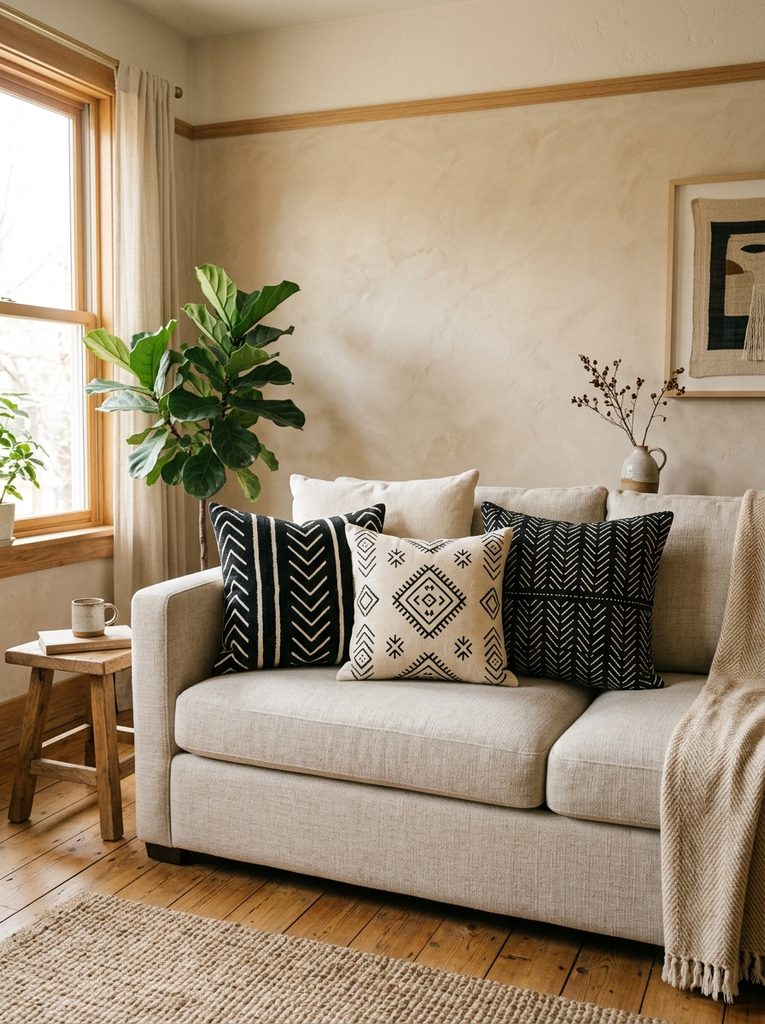
The concept centers on establishing a grounded, textured sofa display using three handmade mudcloth pillow covers featuring contrasting black-and-white geometric motifs. To execute this setup method, begin by cutting two 18-inch squares of heavy cotton mudcloth and matching cream linen backing fabric. Sew the panels together with right sides facing inward, leaving a small opening along the bottom seam to insert a plush down-alternative pillow form. Slip-stitch the opening closed by hand using matching upholstery thread to secure a clean, professional finish along all four edges. Material choices should emphasize thick, textured hand-spun cotton and authentic fermented mud-dyed patterns that highlight traditional artisan craftsmanship. Styling tips include layering the patterned pillows against solid linen cushions to create balanced contrast and tactile depth on a neutral sofa. This approach transforms a standard seating arrangement into a vibrant focal point that echoes global bohemian influences and handmade tradition.
Idea 2: Framed Mudcloth Textile Wall Art
How to Create
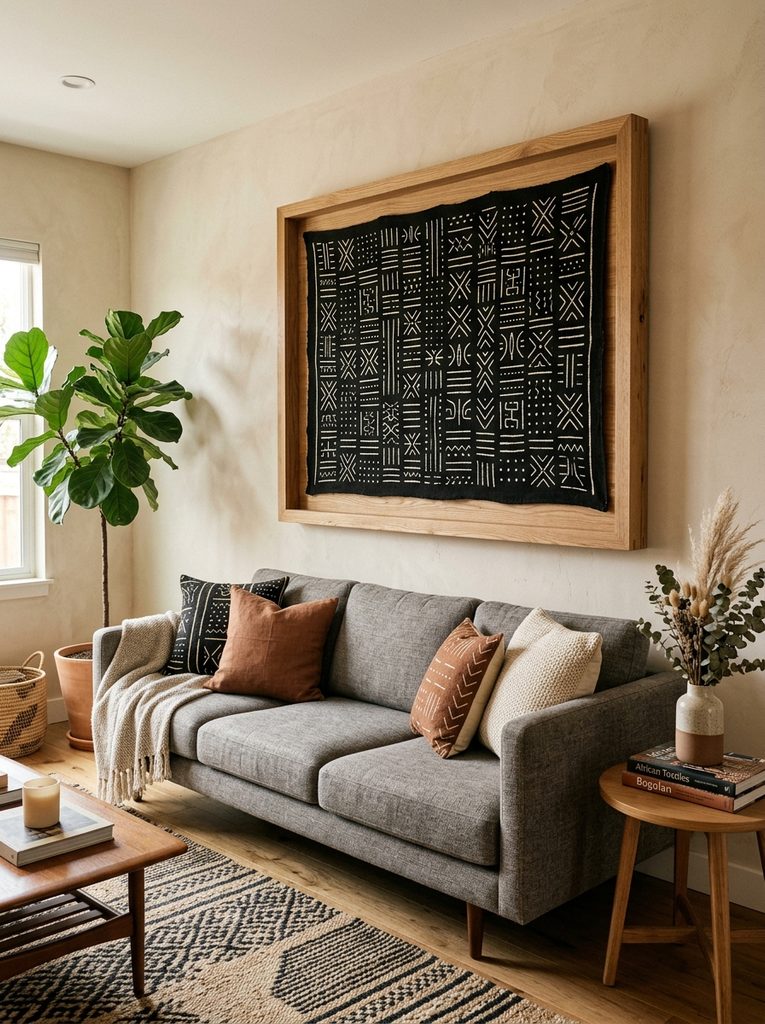
This design introduces vertical dimension and cultural narrative by mounting stretched sections of patterned fabric directly into large wooden picture frames. Begin the execution process by cutting a remnant piece of black mudcloth to fit precisely over a thick foam core backing board. Secure the fabric tightly to the back of the board using heavy-duty staples, ensuring the bold chevron lines remain perfectly straight and centered. Place the wrapped foam board inside an oversized oak shadow box frame and secure the backing clips firmly in place. Position this large framed textile piece directly above your main living room sofa to serve as an anchoring visual centerpiece. Ensure that the frame glass is removed to allow the rich matte texture of the hand-woven cotton fibers to remain fully visible. Materials should focus on raw oak wood framing, high-density backing boards, and patterned African textile fragments. This arrangement strategy provides practical utility by creating large-scale art displays on a modest budget.
You Might Also Like


Idea 3: Upholstered Ottoman with Leather Strapping
How to Create
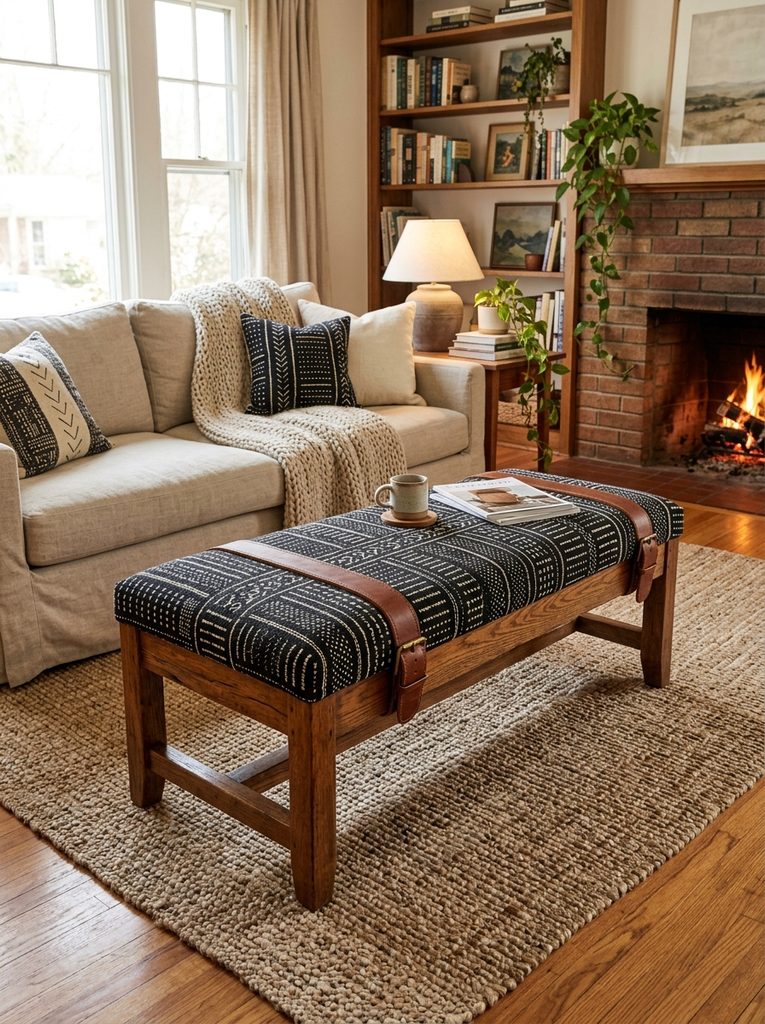
Focusing on rich tactile storytelling, this layout incorporates a custom-upholstered low bench covered entirely in dense, patterned mudcloth fabric. Start by selecting a sturdy wooden coffee table base and removing any old worn-out cushion top to expose the bare frame. Wrap the wooden top surface in high-density upholstery foam, securing it tightly with industrial staples along the underside edges. Cover the foam padding with your patterned mudcloth fabric, pulling the corners taut to create sharp, tailored folds before stapling it securely. Add two parallel strips of genuine leather upholstery strapping across the top surface, securing the ends underneath the bench for added structural contrast. The step-by-step method requires careful pattern alignment so that the central geometric diamonds run straight down the middle of the furniture piece. This creative project elevates standard living room seating into a dynamic showcase of global style, adding rich layers of utility and aesthetic intrigue.
Idea 4: Layered Mudcloth Throw Blanket Drape
How to Create
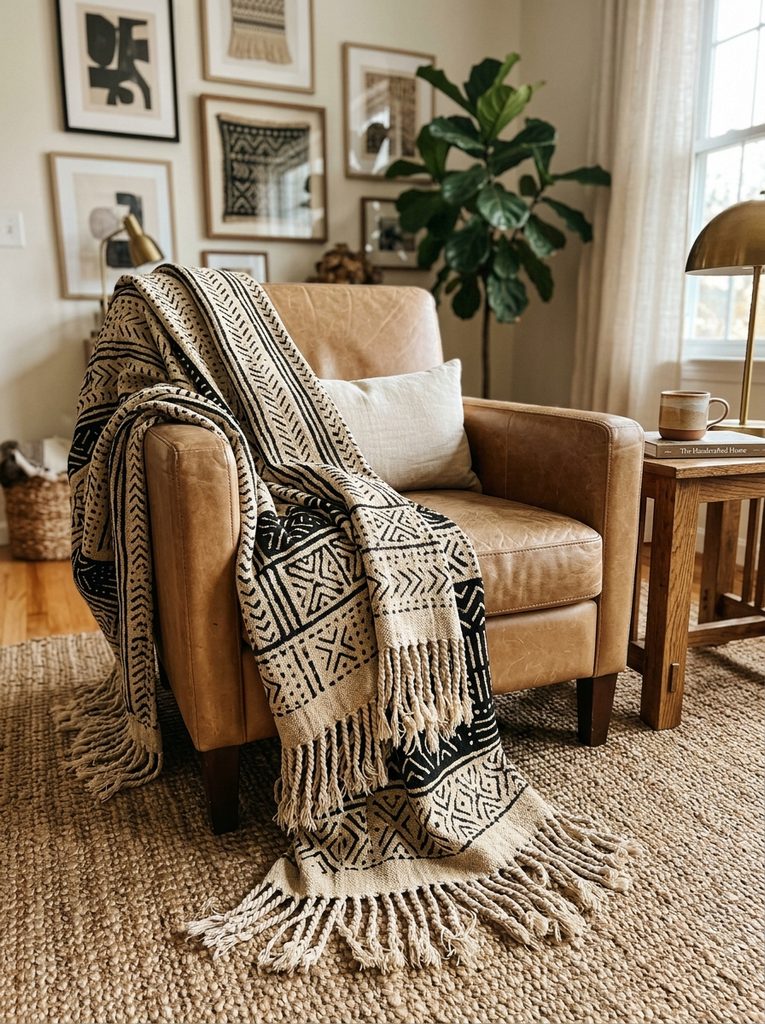
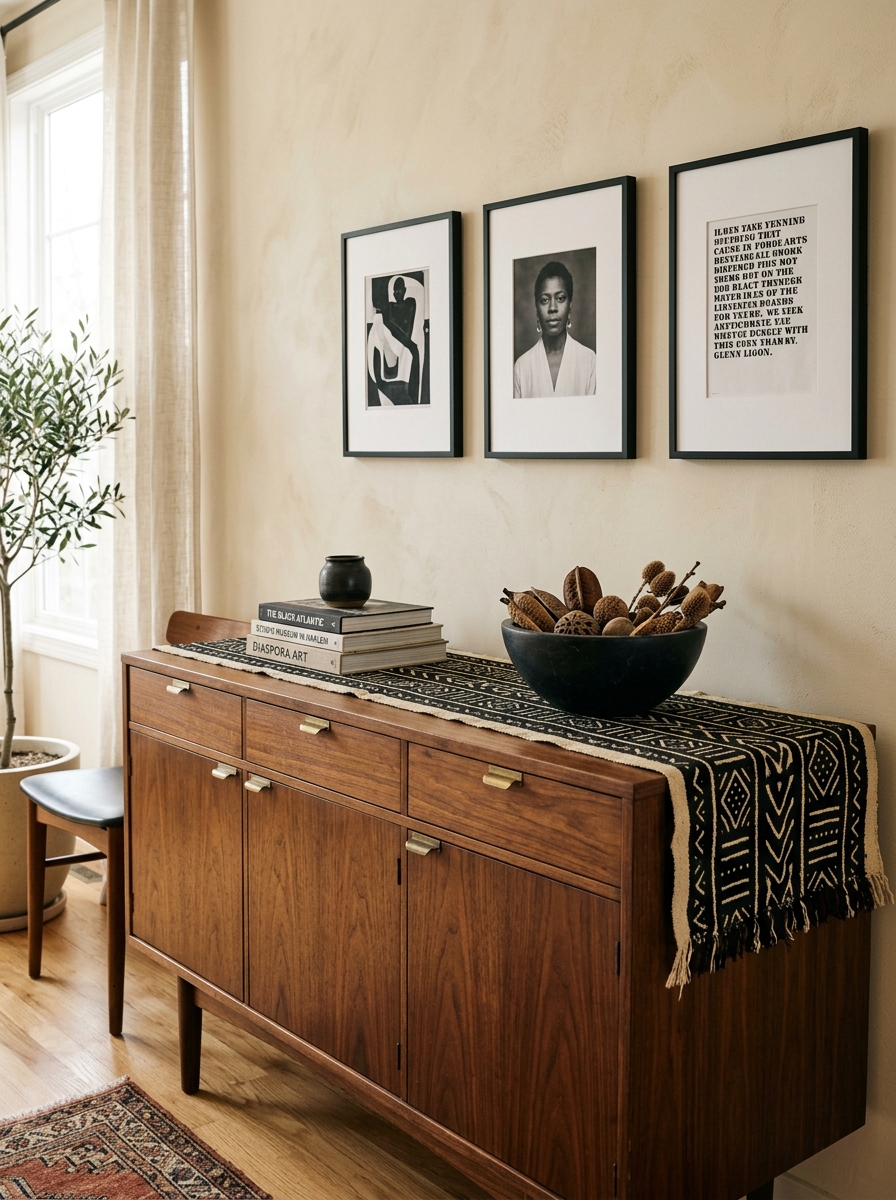
Bringing relaxed comfort and effortless layering into your seating space elevates a standard sofa, creating a warm, inviting invitation to unwind. The setup method involves selecting an extra-long mudcloth throw blanket featuring traditional fringe detailing along both short ends. Drape the heavy textile diagonally across the corner of a neutral leather or linen armchair, allowing the fabric to pool slightly on the floor. Ensure that the bold tribal patterns face outward to maximize visual impact when viewed from across the living room. Incorporate a small wooden side table nearby to balance the asymmetrical visual weight of the draped blanket. Materials should highlight thick woven cotton, natural plant-based dyes, and hand-knotted fringe accents that require minimal maintenance. This approach adds understated elegance and organic softness to your home decor while maintaining the warm atmosphere characteristic of global eclectic interiors.
Idea 5: Oversized Floor Cushion and Lounging Nook
How to Create
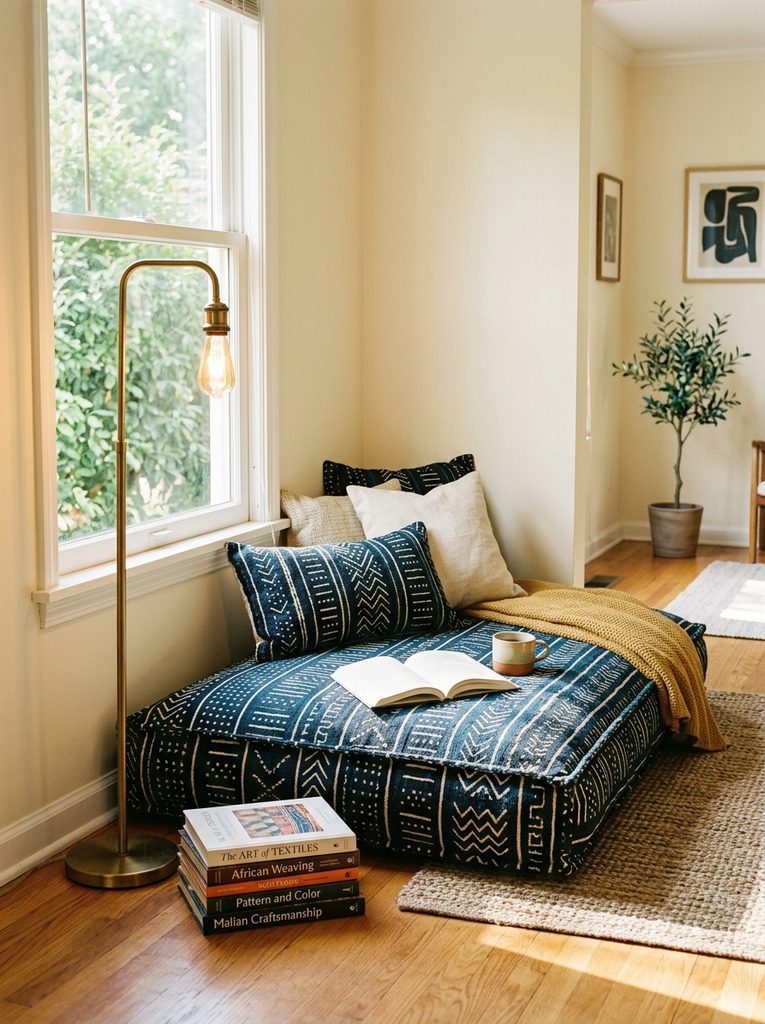
Balancing casual floor seating with durable, patterned textiles adds charming character and relaxed functionality to empty living room corners. Begin the arrangement process by sewing a large rectangular floor cushion cover measuring forty by thirty inches using heavy mudcloth yardage. Stuff the oversized cover tightly with dense shredded foam filling or multiple standard bed pillows to ensure firm support during lounging. Place the finished floor cushion directly on a natural jute area rug in a sunlit corner of your living room. The execution process requires reinforcing all primary seams with double-stitched reinforcement threads to withstand regular daily weight and movement. Pair the textured cotton fabric with a low brass floor lamp and a stack of art books to create a cozy reading retreat. The setup relies on comfort and casual elegance, transforming underutilized floor space into a functional and stylish living zone with minimal effort.
Idea 6: Minimalist Mudcloth Table Runner
How to Create
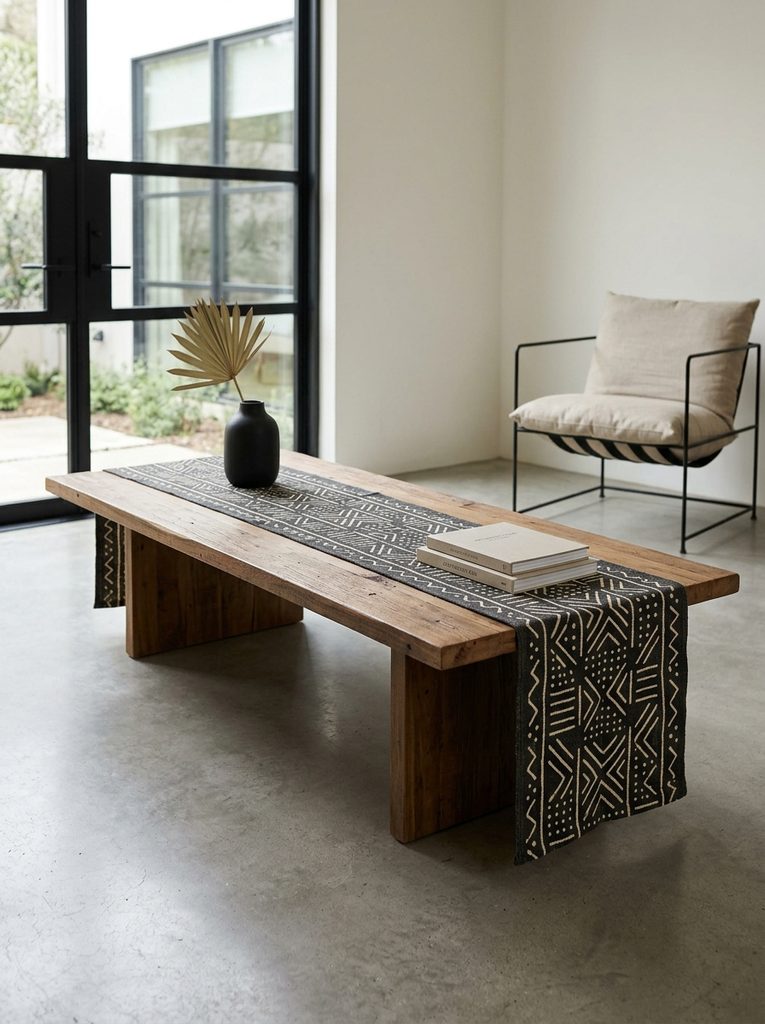
Mounting a long strip of patterned fabric directly down the center of a coffee table creates an architectural surface decoration that unifies scattered room accessories. To execute this setup method, cut a runner measuring fourteen inches wide by sixty inches long from a continuous bolt of mudcloth. Fold all four raw edges inward by half an inch and press them flat with a hot iron before running a straight stitch along the perimeter. Place the finished runner centrally across a reclaimed wood coffee table, allowing the ends to drape evenly over opposite edges. Leave strategic pockets of negative space around the runner to let the natural wood grain peek through and maintain an airy feel. This method requires careful measuring to ensure the pattern runs straight and centered across the furniture surface. Materials needed include patterned cotton fabric, matching thread, and a standard sewing machine. This minimalist style adaptation brings order to surface styling while maintaining global warmth.
Idea 7: Upholstered Accent Chair Back Panel
How to Create
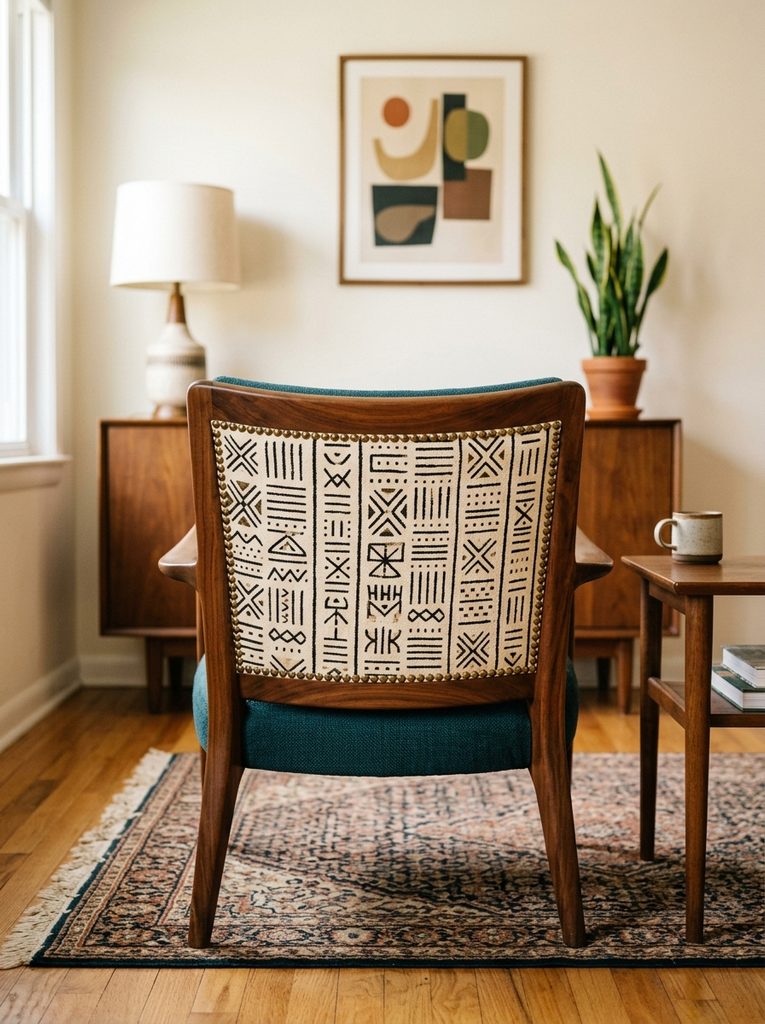
Treating furniture backrests as canvases for unique textile art allows you to customize standard accent chairs into one-of-a-kind statement pieces. The step-by-step guide begins with removing the rear fabric panel from a vintage mid-century wooden armchair using a staple remover tool. Cut a custom panel of patterned mudcloth to match the exact dimensions of the chair back, leaving a one-inch margin for folding. Stretch the fabric tightly across the rear wooden frame, securing it in place with small upholstery tacks spaced evenly along the perimeter. Choose fabric pieces where the central mudcloth motif frames the exact center of the chair back for maximum visual symmetry. Ensure that all tack heads are hammered in flush with the wood grain to maintain a clean, professional finish. This creative project transforms ordinary secondhand furniture into a dynamic design statement, adding profound narrative depth and organic sophistication to your living room.
You Might Also Like

Idea 8: Mudcloth Wrapped Storage Baskets
How to Create
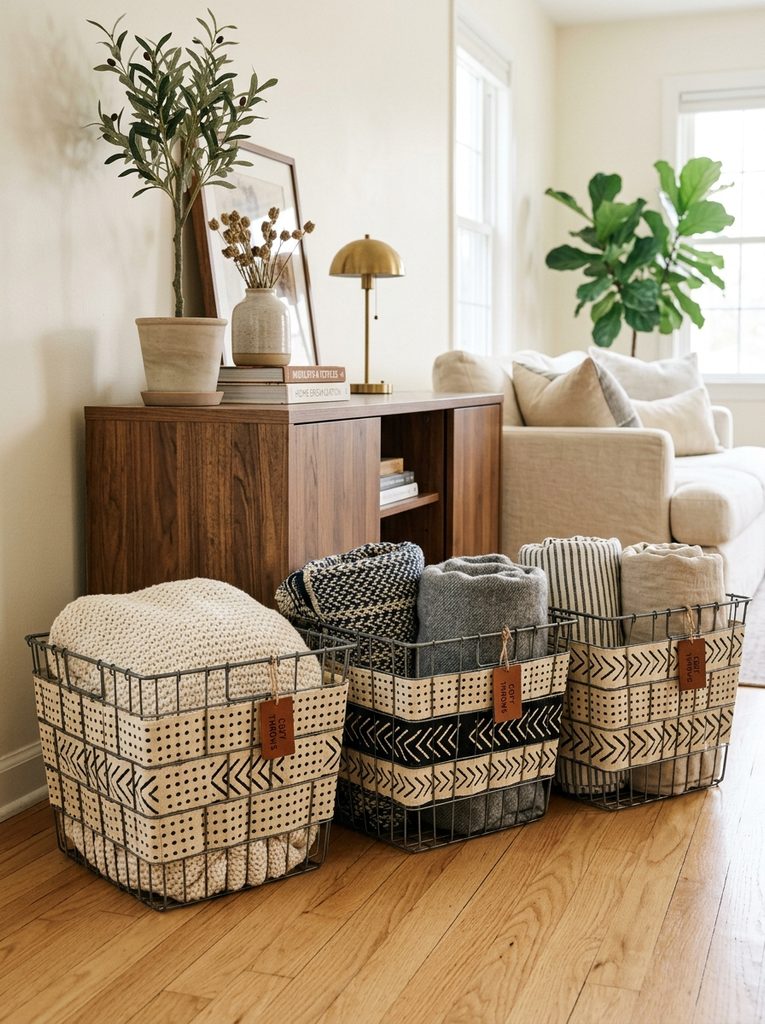
Emphasizing functional storage solutions wrapped in tactile fabrics creates a modern, organized focal point for living room organization. Begin by selecting three standard wire or wicker storage baskets used for holding extra throw blankets and remote controls. Wrap strips of patterned mudcloth around the exterior body of each basket, weaving the fabric in and out of the structural wire gaps. Secure the fabric ends tightly inside the rim of the basket using small drops of heavy-duty fabric adhesive. The execution process relies on consistent pattern alignment so that the geometric symbols appear continuous around the entire container perimeter. Keep surrounding surfaces relatively sparse to let these textured storage vessels stand out clearly without visual clutter. Materials should include wire baskets, mudcloth fabric remnants, and safe adhesive. This styling technique provides a masterclass in functional beauty, proving that everyday storage accessories can carry high design impact.
Idea 9: Floating Wall Hanging Tapestry Rod
How to Create
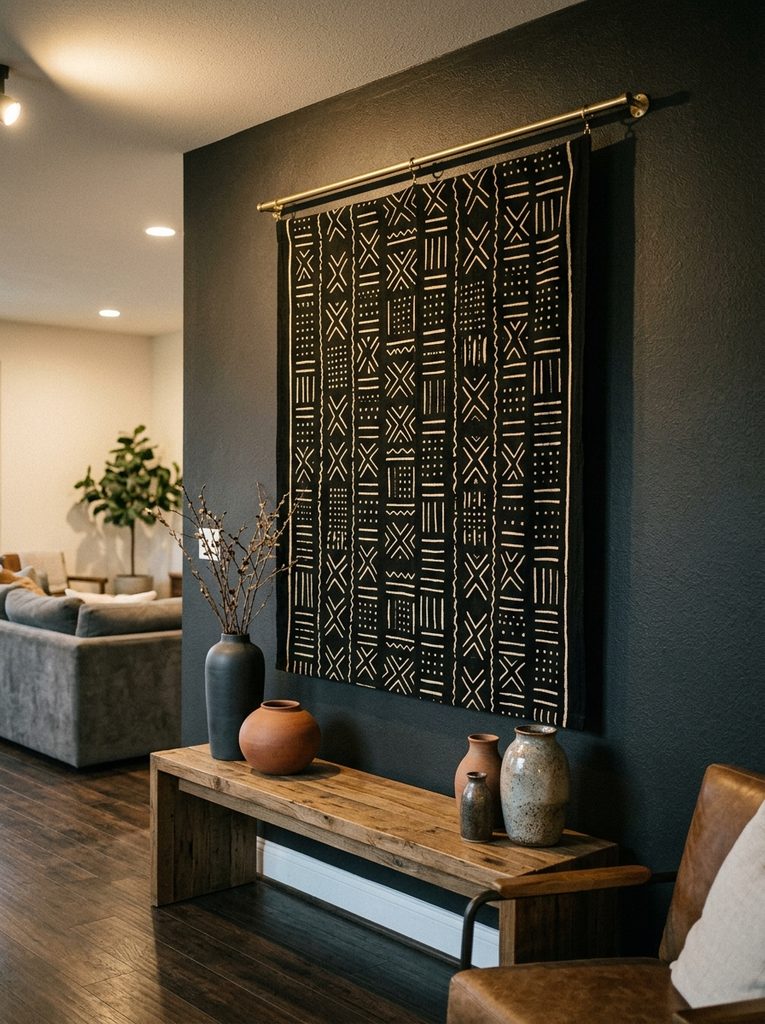
Incorporating hanging textiles on polished metal rods introduces sculptural vertical lines that soften harsh drywall corners. To execute this setup method, create a three-inch pole pocket along the top edge of a large rectangular mudcloth panel using a sewing machine. Slide a heavy brass curtain rod through the sewn pocket, ensuring the fabric gathers evenly across the center span. Mount the brass rod securely onto your living room accent wall using matching wall brackets and heavy-duty drywall anchors. On the wall beneath the hanging textile, place a low wooden console table decorated with ceramic vases to anchor the lower visual plane. Ensure that the bottom edge of the hanging cloth hovers roughly six inches above the top surface of the console. Materials required include a brass rod, mounting brackets, and a large mudcloth wall panel. This approach infuses seasonal change and raw earthiness into your home environment, maintaining a serene atmosphere.
Idea 10: Multi-Textured Patchwork Statement Screen
How to Create
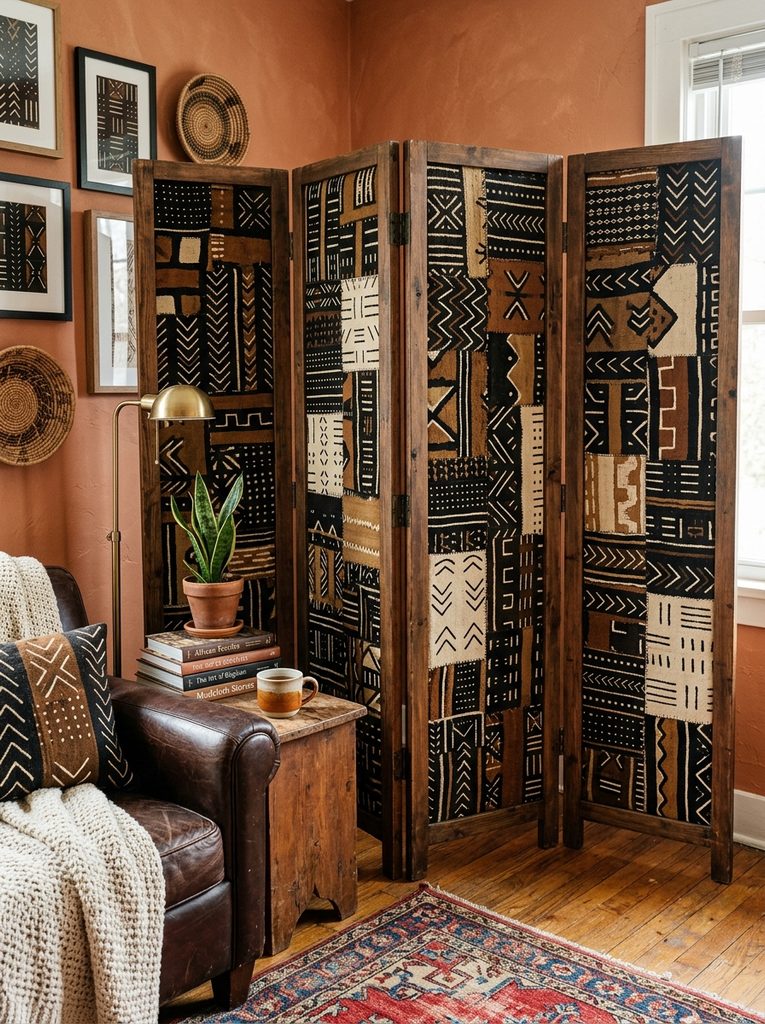
Integrating a multi-panel folding privacy screen upholstered with varied mudcloth scraps offers flexible room division and stunning visual artistry combined. Begin the installation process by selecting a vintage three-panel wooden room divider frame and cleaning all wooden hinges thoroughly. Cut various patches of mudcloth featuring different black, white, and brown mud-dyed patterns to fit each individual wooden panel inset. Staple the varied fabric patches tightly into the frame recesses, creating an intentional patchwork collage effect across the screen surface. The setup method requires balancing dense geometric patterns with simpler solid linen patches to prevent visual overcrowding across the panels. Materials include a wooden folding screen, assorted mudcloth fabric scraps, and an industrial staple gun. This final technique adds functional versatility and a dynamic, textured arrangement to your home decor, keeping living room layouts adaptable and engaging.
Common Beginner Mistakes and How to Avoid Them
Creating balanced and visually appealing textile displays often involves navigating common pitfalls that can easily disrupt your interior design goals if left unaddressed. One frequent error is overusing heavy geometric patterns on every single surface, which creates visual fatigue and overwhelms the room’s spatial balance. To avoid this, balance bold mudcloth prints with solid neutral linens, smooth leather surfaces, and calm wooden textures throughout the space. Another mistake is failing to pre-shrink authentic hand-woven cotton fabrics before sewing, leading to distorted shapes after the first wash. Combat this by always washing and air-drying your mudcloth yardage before cutting or constructing any DIY projects. Additionally, neglecting to reinforce stress seams on pillows and cushions compromises fabric durability under daily use. Always double-stitch primary load-bearing seams using strong upholstery-grade threads.
Practical Tips for Better Results
Achieving professional-grade results requires adopting specific styling habits that enhance cohesion and elevate the overall impact of your textile arrangements. Start by establishing a restricted color palette consisting of classic mudcloth tones, such as black, cream, charcoal, and warm mud brown, to harmonize the space. Utilize the rule of three when arranging patterned pillows or wall hangings, grouping items in odd numbers to create natural visual harmony. Incorporate varied tactile surfaces, such as pairing thick woven cotton with smooth leather, raw wood, and polished brass accents. Step back frequently during the styling process to view your living room from across the room, helping you spot pattern imbalances or color clashes immediately. Regularly vacuum fabric upholstery using low suction brush attachments to keep your mudcloth displays looking fresh and dust-free. Implementing these actionable strategies ensures your textile decor maintains high aesthetic appeal.
Styling, Presentation, and Organization Ideas
Elevating your mudcloth decor beyond basic fabric placement requires thoughtful attention to presentation details that enhance both beauty and functional utility. Organize your extra sewing scraps, spare cushion inserts, and fabric care tools neatly inside a dedicated vintage wooden storage chest. Introduce warm accent lighting using floor lamps placed near your textile arrangements to highlight the rich, handcrafted texture of the cotton weaves during evening hours. Incorporate personal touches like handmade ceramic vessels from local artisans or framed family photographs displayed alongside your mudcloth wall art. Keep lint rollers and fabric care sprays out of sight by utilizing matching woven storage baskets placed beneath nearby consoles. Pay close attention to how natural light enters the room throughout the day, positioning light-textured pieces where they catch pleasant sunlight. These thoughtful presentation choices turn standard decorating tasks into rewarding creative projects.
Budget and Time Planning Strategies
Executing a stunning living room textile transformation does not require excessive financial investment or endless hours if you approach the project with clear planning. Begin by auditing fabric remnants and old pillow forms you already own, utilizing secondhand textiles to minimize material procurement costs. Allocate a modest budget specifically for essential missing items like quality zippers, polyester pillow inserts, or specialized upholstery tacks. Dedicate a solid weekend afternoon of three to four hours for the entire process, dividing your time evenly between measuring, cutting, sewing, and styling. Avoid impulse buying by sketching out a precise room layout on paper before purchasing any new fabric yards or furniture frames. This structured approach saves valuable time and financial resources while ensuring that your finished project meets your aesthetic expectations without unnecessary stress.
Creative Expansion and Advanced Inspiration
Pushing your design skills further involves experimenting with unconventional materials and bold structural installations to create truly one-of-a-kind living room spaces. Consider building a custom upholstered headboard or daybed frame covered entirely in joined mudcloth panels for a dramatic architectural focal point. Integrate unexpected sculptural elements like vintage carved wooden stools, woven grass baskets, and raw iron hardware directly into your textile displays. Experiment with seasonal transitions by swapping out heavy black-and-white patterned throws for lighter terracotta-toned cotton weaves during warmer summer months. Explore integrating hidden shelving units behind large fabric wall hangings to create secret storage compartments that maintain a minimalist aesthetic. These advanced creative expansions allow you to continually evolve your interior spaces, ensuring your home remains a dynamic reflection of your growing design confidence and personal style.

Visual inspiration, practical ideas and editorial stories for everyday living.
Leave a Comment