Essential Materials and Pre-Placement Preparation Steps
Executing a successful bedroom plant styling project requires thorough preparation and the assembly of appropriate materials before positioning your greenery. Decorators must gather healthy, well-rooted spider plants along with proper planting containers featuring built-in drainage holes, saucer trays, and lightweight potting mix. Essential installation tools include stud finders, heavy-duty wall anchors, ceiling hooks, measuring tapes, electric drills, and decorative mounting brackets. Preparation begins by assessing the bedroom light orientation, identifying areas that receive indirect sunlight to prevent delicate leaf tips from scorching under direct rays. It is critical to inspect plant containers for structural integrity, ensuring that hanging pots feature secure attachment points capable of supporting wet soil weight. Planning considerations must also address routine maintenance access, ensuring elevated hanging baskets or top-shelf displays can be watered easily without damaging bedding or wood furniture. Investing time into these early structural preparations establishes a safe, organized foundation that protects both your botanical investments and overall room aesthetics.
Idea 1: The Cascading Floating Window Shelf Display
How to Create
The cascading floating window shelf display utilizes natural daylight zones to create a vibrant botanical frame around bedroom window openings. This design concept relies on mounting a clear acrylic or light-toned wooden shelf directly across the midsection of a window frame, elevating the plants to eye level. Positioned in this primary light zone, the spider plant produces abundant variegated leaves and cascading offshoots that hang gracefully toward the windowsill. The arrangement maximizes sunlight exposure while keeping floor space entirely clear, making it an ideal option for compact bedroom layouts. The natural light filtering through the arching foliage creates soft, dynamic shadows across the room throughout the day.
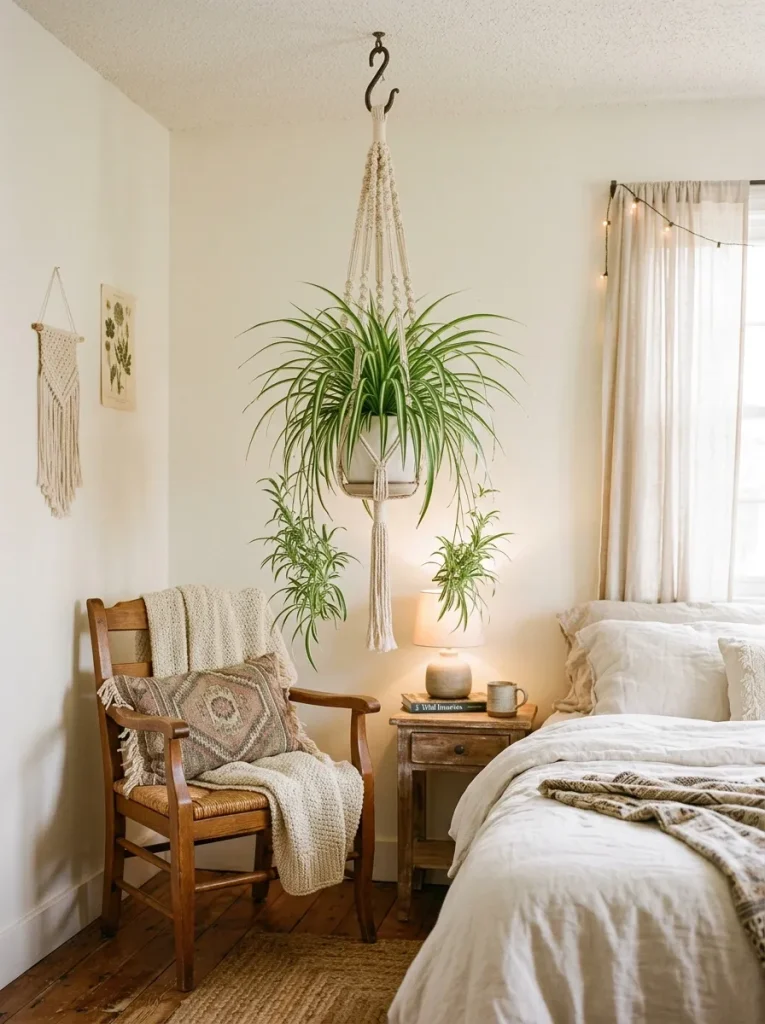
To implement this layout step by step, measure the interior width of your window frame to select a pre-cut clear acrylic or pine shelf plank. Secure sturdy metal support brackets to the side jambs of the window frame using a level and wood screws, ensuring the structure supports at least fifteen pounds. Place the shelf onto the mounted brackets, verifying that it sits completely flat and rigid before arranging your containers. Position a mature spider plant in a matte ceramic pot equipped with a fitted drainage saucer at the center of the shelf board. Flank the main plant with smaller potted offshoots to build a balanced, symmetrical botanical arrangement that fills the window view elegantly.