10 Gothic & Victorian Theme Dark and Moody Bedroom Paint Colors

Designing a dark and moody bedroom inspired by Gothic and Victorian aesthetics creates a sophisticated sanctuary defined by depth, drama, and timeless elegance. Dark color palettes have surged in home decor because they offer an intimate, cozy atmosphere while serving as a rich backdrop for architectural details. This guide outlines ten unique dark paint concepts tailored for a Victorian-inspired bedroom makeover. Readers will discover how to select deep tones, pair contrasting textures, and balance intense hues with surrounding lighting. Understanding how dark paints interact with space allows homeowners to implement bold choices without overwhelming a room. Whether aiming for dramatic contrast or a subtle, modern minimalist style, these creative ideas provide a step-by-step tutorial framework to transform any sleeping space into a refined retreat.
Why This Idea Is Trending or Useful
Dark and moody wall treatments represent a major shift in modern interior design, moving away from plain white walls toward rich, expressive environments. On visual platforms like Pinterest, Gothic and Victorian decor concepts consistently draw interest because they blend classic architectural elegance with contemporary comfort. The practical value of deep paint tones lies in their ability to absorb light, mask wall imperfections, and make large or awkward spaces feel structured and intentionally cozy. This aesthetic holds strong DIY appeal because changing wall color provides a dramatic visual shift for a relatively low investment. The approach is entirely beginner friendly, requiring basic painting tools and thoughtful planning rather than specialized construction skills. Anyone can execute a high-end, atmospheric room transformation using simple paint techniques and strategic styling choices.
Materials and Preparation
Proper surface preparation and high-quality materials ensure a smooth, durable finish when working with deep saturated pigments. Essential supplies include high-adhesion wall primer, premium acrylic latex paint in a matte or satin finish, painter’s tape, micro-fiber rollers, angular sash brushes, drop cloths, and medium-grit sandpaper. Begin by clearing the room and cleaning the walls with a mild detergent solution to remove dust and oils. Fill nail holes or drywall cracks with spackling compound, allow it to dry completely, and sand the surface flat. Apply painter’s tape along trim, ceiling borders, and electrical outlets to maintain sharp lines. Applying a tinted gray primer before painting prevents color bleed and guarantees full coverage in fewer coats. Thorough planning at this preparation stage produces professional, long-lasting results for your creative project.
1. Midnight Raven Velvet Finish
How to Create
A rich, near-black hue with subtle charcoal undertones provides the ultimate canvas for a dramatic Gothic bedroom space. To achieve this look, apply a dark gray primer across all walls, allowing it to cure fully for four hours. Follow with two coats of ultra-matte black acrylic paint using a high-density microfiber roller to eliminate visible stroke lines. Focus on creating seamless coverage from edge to edge, using a angled trim brush for corners and ceiling transitions. Pair this deep shade with plush textiles such as deep burgundy velvet curtains, tufted headboards, and ornate brass wall sconces to soften the starkness of the black paint. The matte texture absorbs ambient light, reducing glare and creating a luxurious, cocoon-like atmosphere that emphasizes Victorian structural details like carved wood framing and decorative ceiling medallions.
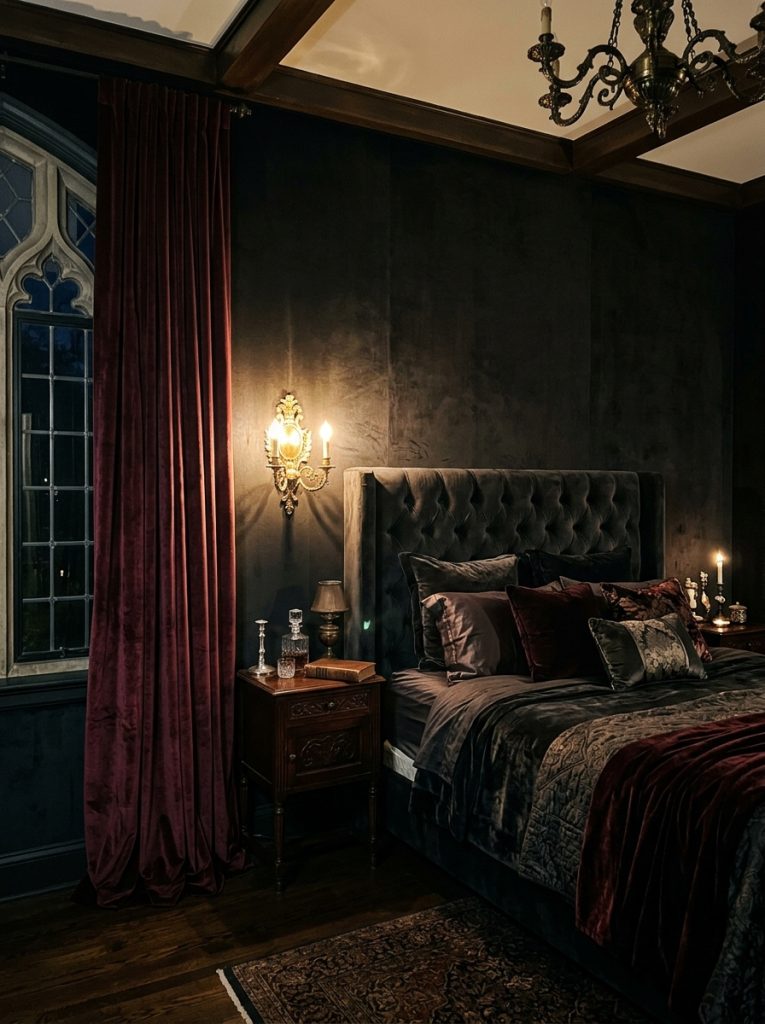
2. Deep Obsidian with Carved Wood Contrast
Step-by-Step Guide
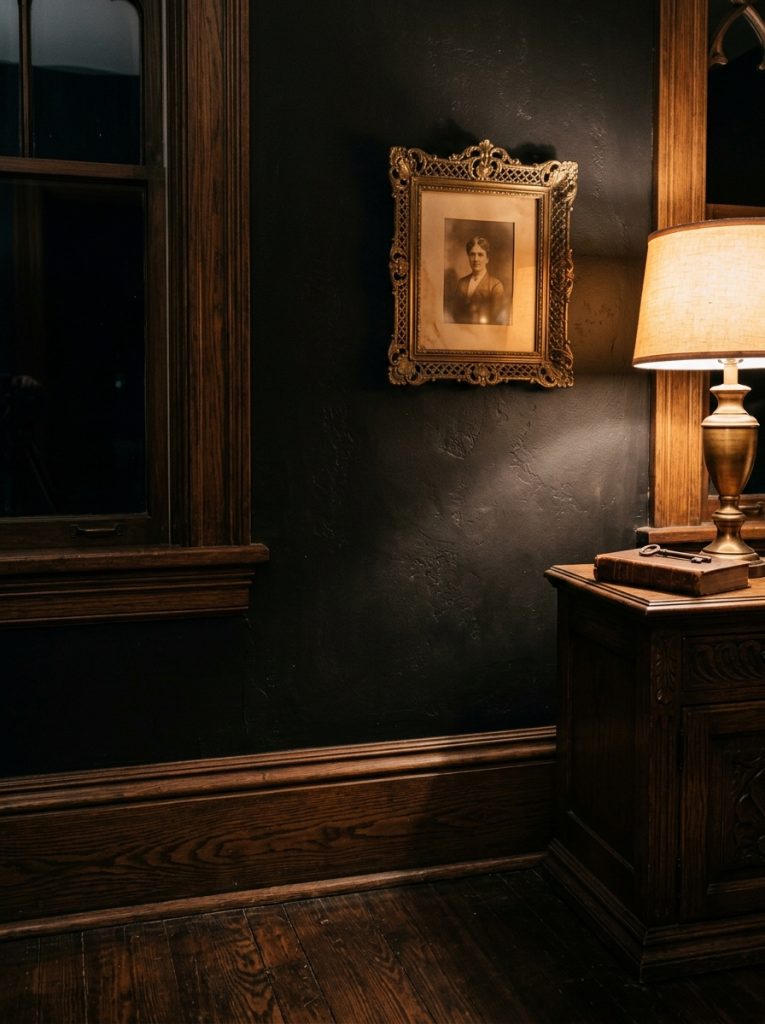
Combine deep obsidian paint with natural dark wood trim to echo classic late-Victorian estate architecture. Begin by sanding existing trim and applying a clear wood stain or dark varnish to retain the natural grain texture of your baseboards and window casings. Once the woodwork finishes curing, apply low-tack painter’s tape along the outer borders of the trim. Paint the main wall surfaces in a rich obsidian tone featuring warm black undertones, utilizing a standard roller setup for the flat drywall sections. The contrast between smooth dark walls and textured, warm wood creates visual architecture without requiring structural changes. Incorporate antique brass picture frames, framed botanical prints, and warm-toned accent lighting to highlight the rich depth where wall and wood trim intersect.
You Might Also Like


3. Dark Charcoal Frame Molding Walls
Setup Method
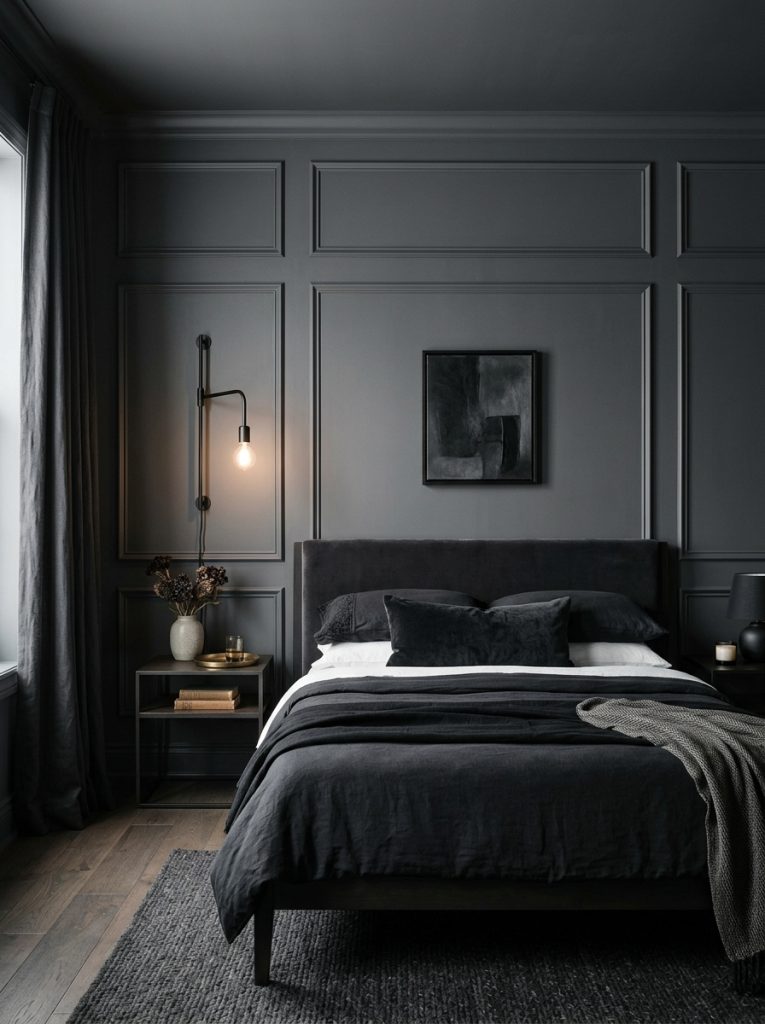
Transform plain drywall into a classical Victorian wall system using applied picture frame molding painted in a unified dark charcoal hue. Cut lightweight pine or polyurethane molding strips to form geometric wall panels across the entire space. Secure the molding pieces using construction adhesive and finish nails, filling nail holes with wood putty before sanding them smooth. Coat the entire wall, including the applied trim strips, in a single shade of deep matte charcoal. Painting both the trim and the underlying wall the exact same color creates subtle shadow lines and dimensional depth without visual clutter. Complete the layout by installing dimmable wall sconces inside select panels, casting gentle upward light across the architectural ridges.
4. Moody Slate Blue Accent Architecture
Execution Process
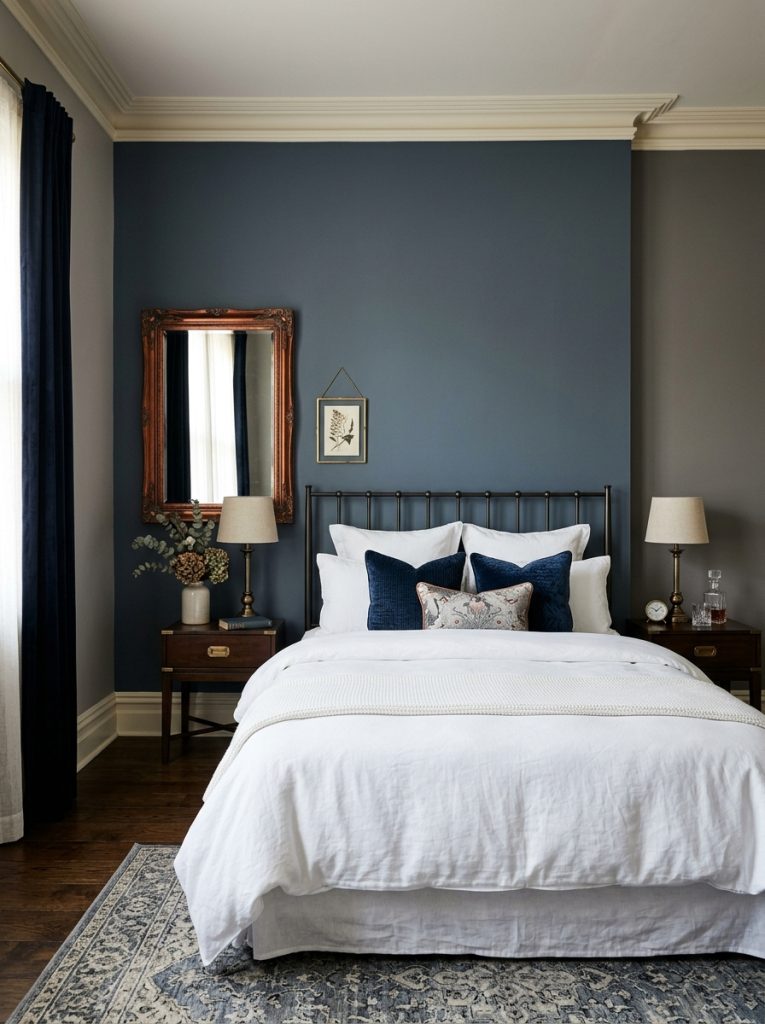
Slate blue offers a cooler, sophisticated alternative to pure black while preserving a moody Victorian aesthetic. Select a slate paint infused with deep gray undertones to prevent the color from appearing bright or overly vibrant under daylight. Apply this color specifically to the main wall behind the bed frame to serve as a focused architectural accent piece, keeping adjacent walls in a slightly lighter charcoal gray. Use high-precision tape to define crisp corner seams where the blue meets neighboring surfaces. Style the finished blue backdrop with warm metallic accents, such as aged copper or brushed gold mirrors, alongside crisp white linens to balance the muted blue tones and maintain clean, elegant contrast.
5. Shadow Plum Saturated Enclosure
How to Make
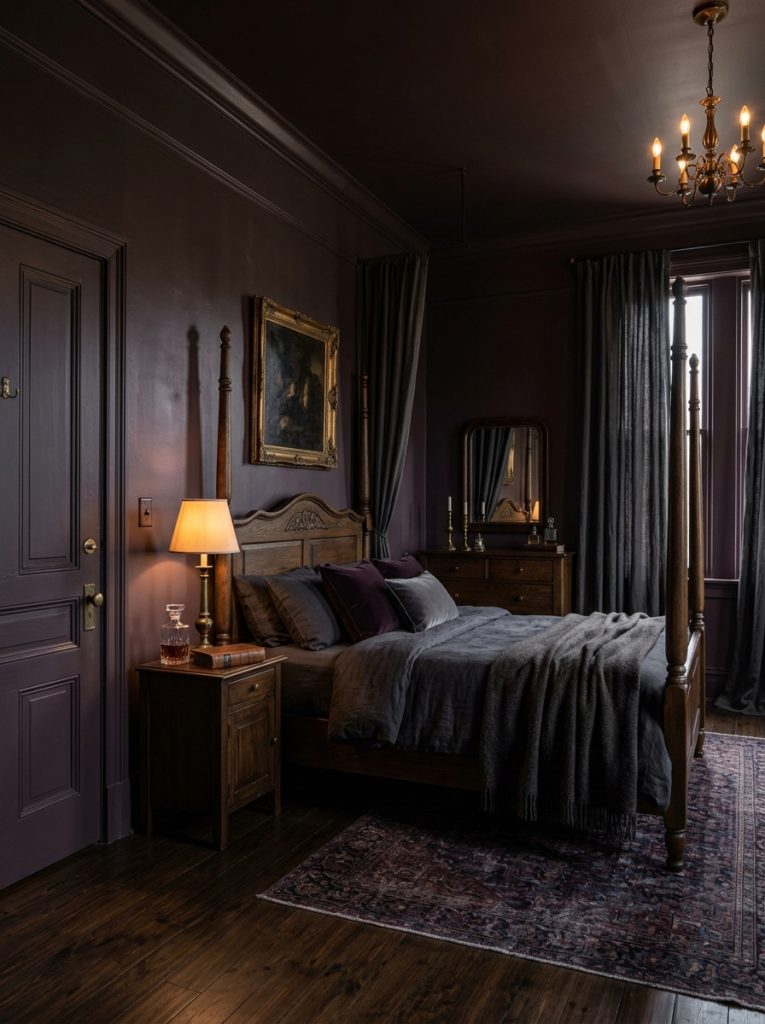
A saturated shadow plum paint choice delivers a regal, romantic Gothic atmosphere ideal for evening relaxation. Prepare the wall surface by sanding away existing gloss and wiping down the area with a tack cloth. Coat all four walls and the baseboards in a rich, dark plum paint with brown-purple undertones, choosing a satin sheen to subtly reflect ambient lamp light. Paint the window trim and interior door surfaces in the same plum shade to create a continuous, immersive color envelope throughout the bedroom. Accessorize the completed space with heavy linen drapery in charcoal, dark hardwood furniture, and vintage amber glass table lamps to enhance the warm, mysterious mood of the dark purple hues.
6. Saturated Crimson Gothic Sanctuary
How to Create
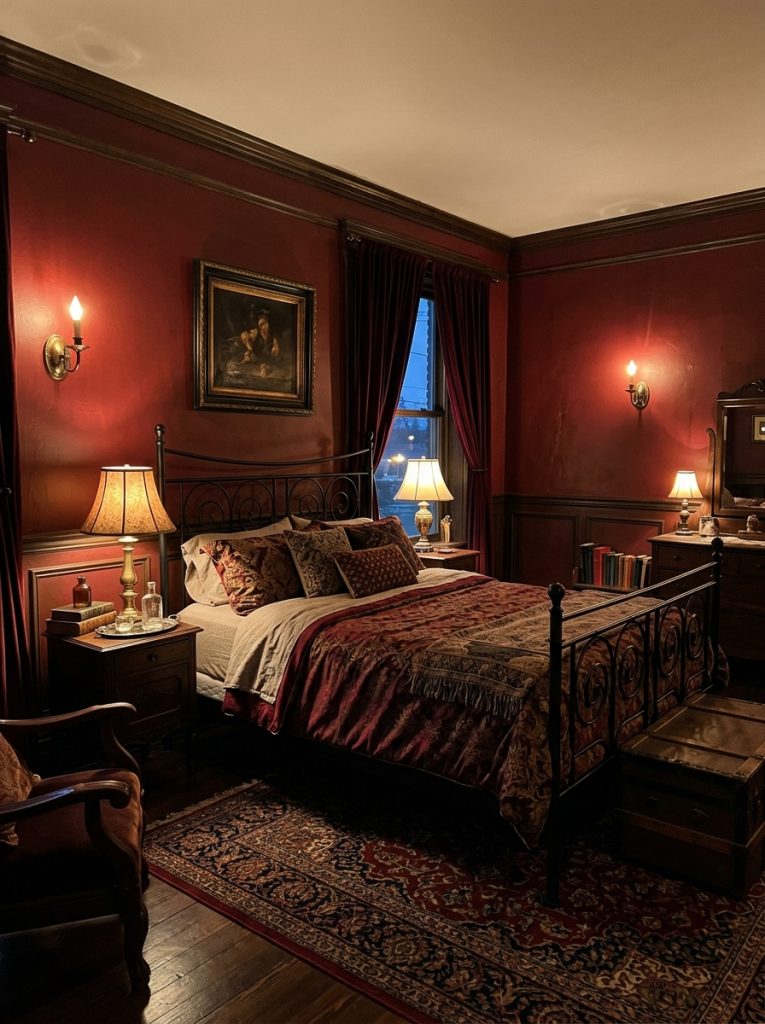
Deep crimson red walls echo classic Victorian parlor styling, bringing warmth, energy, and rich drama to a sleeping space. Select a deep wine red with brown undertones rather than a bright primary red to keep the environment grounded and calm. Apply a dark reddish-gray primer coat first, as deep red pigments often require enhanced base opacity for uniform coverage. Follow with two coats of eggshell finish crimson paint using smooth, overlapping vertical roller passes. Complement the red walls with matte black furniture frames, antique iron wall fixtures, and dark vintage rugs. The resulting room design feels historic and deliberate, offering strong visual impact while remaining warm and cozy during evening hours.
You Might Also Like

7. Forest Noir Board and Batten
Step-by-Step Guide
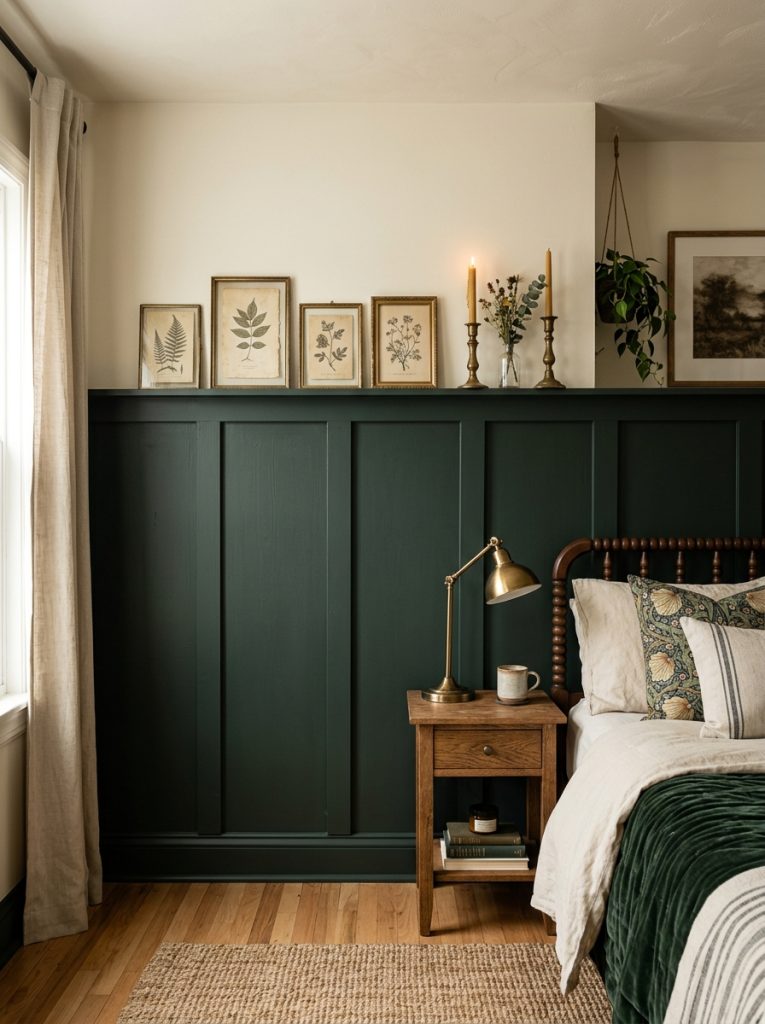
Forest noir combines deep hunter green with black undertones, offering an earthy take on Gothic interior styling. Install vertical wooden battens spaced twenty inches apart across the bottom two-thirds of the main bedroom wall, topping them with a simple horizontal ledge rail. Apply wood filler to all seam joints, sand the wood smooth, and wipe clean. Coat both the wooden batten structure and the wall section above it in dark forest green satin paint. The satin finish reflects subtle light along the edges of the vertical boards, highlighting the geometric woodworking while keeping the room dark. Style the ledge rail with small framed oil paintings and vintage brass candlestick holders.
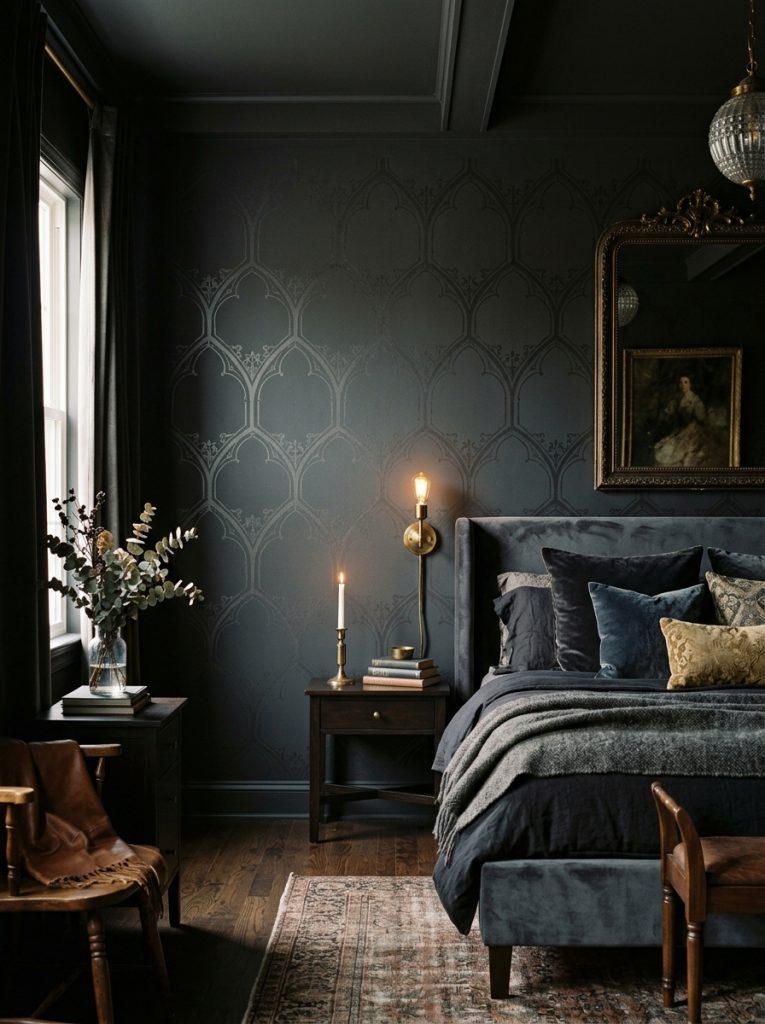
8. Gothic Arch Charcoal Stencil Accent
Setup Method
Integrate historic Victorian architectural motifs by stenciling a repeating Gothic point-arch pattern across a dark charcoal background. Paint the entire room in a smooth matte charcoal base color and allow it to dry for twenty-four hours. Position a large architectural arch stencil against the focal wall, securing it with removable spray adhesive or painter’s tape. Using a dense foam roller damp with metallic graphite or dark pewter paint, apply the stencil pattern lightly to prevent paint bleed under the edges. Repeat the process across the wall to form a subtle, low-contrast wallpaper effect. The delicate shift in finish between matte background and subtle metallic pattern adds historical detail without visually overwhelming the space.
9. Victorian Damask Tone-on-Tone Pattern
Execution Process
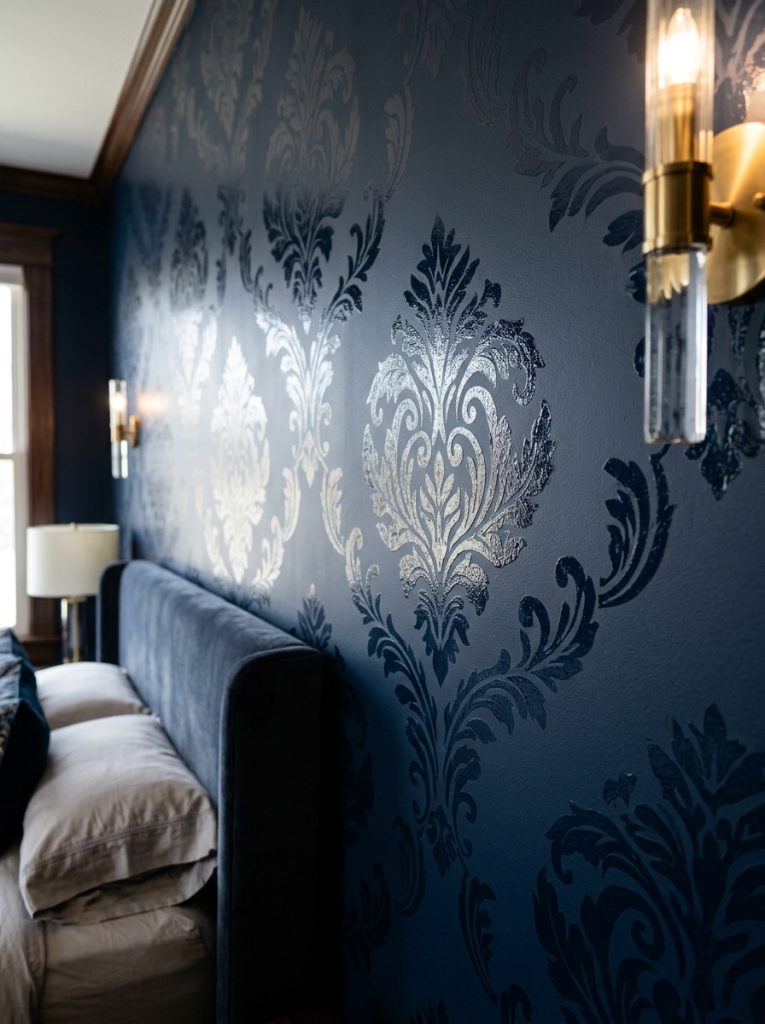
Tone-on-tone damask patterning delivers the look of expensive vintage wallpaper using standard paint techniques. Begin by coating the target wall in a flat matte deep navy or midnight blue base shade. Once dry, place a large damask pattern stencil onto the wall surface. Using the same paint color mixed with a clear gloss acrylic glaze medium, roll over the stencil design smoothly. When the stencil is removed, the pattern displays as a subtle, shiny motif over the flat matte background color. This tone-on-tone technique creates dynamic visual interest that shifts as light moves across the room, providing an authentic Victorian aesthetic that remains understated and modern.
10. Moody Espresso Ceiling Enclosure
How to Make
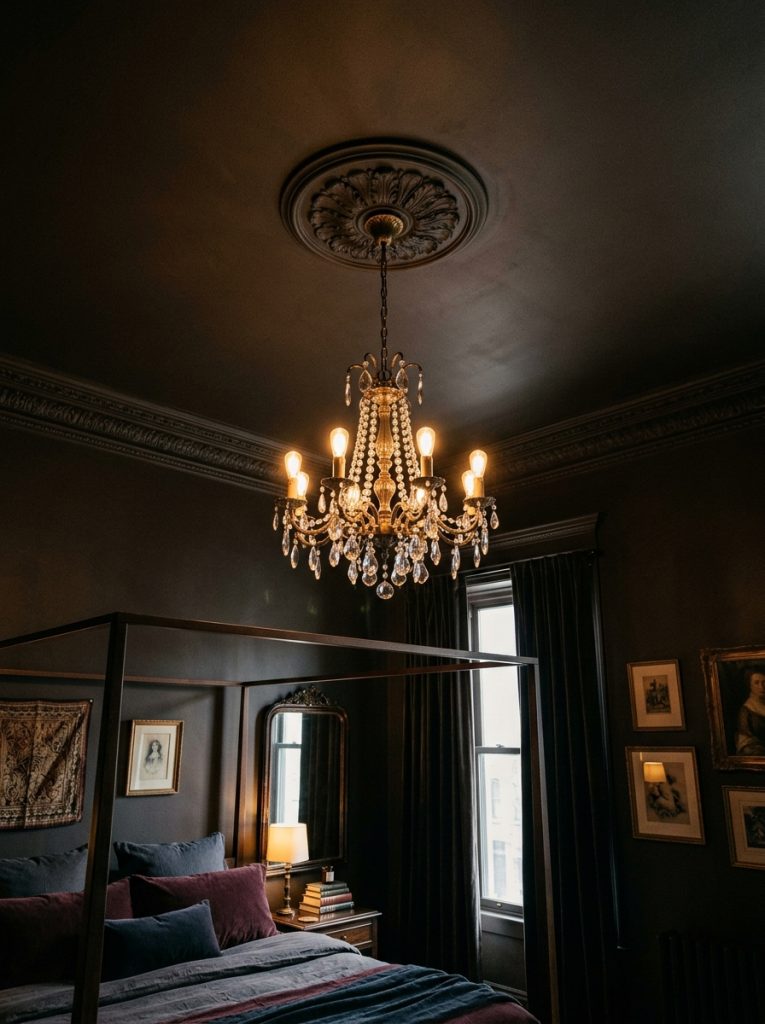
Extending dark paint up onto the ceiling creates an authentic Victorian “jewel box” effect that makes bedroom spaces feel tight, continuous, and private. Select a rich, deep espresso brown paint with cool charcoal undertones to avoid reddish warmth. Use an extension pole and a thick nap roller to apply primer across the ceiling surface, taking care to protect flooring with heavy drop cloths. Roll two coats of matte espresso paint across the ceiling, carrying the color down onto the top crown molding and main walls. Eliminating the harsh line between wall and ceiling visually softens room boundaries, making standard ceilings feel expansive while creating a dark, unified atmosphere designed for rest.
Common Beginner Mistakes and How to Avoid Them
Working with dark paint colors requires specific techniques to avoid patchy finishes and flat-looking rooms. One common error is skipping base primer, which leads to uneven coverage and requires extra coats of dark paint. Always use a gray-tinted primer when transitioning from light walls to deep charcoal, black, or navy tones. Another mistake is relying on a single light source, which causes a dark room to look dull rather than moody. Layer your space with multiple warm lighting elements, such as table lamps, wall sconces, and dimmable overhead fixtures, to cast soft glows across painted surfaces. Finally, avoid using high-gloss finishes on uneven walls, as gloss highlights drywall imperfections; opt for matte, flat, or low-sheen eggshell finishes instead for a smooth velvet appearance.
Practical Tips for Better Results
Achieving a polished look with dark wall paint comes down to precise execution and detail work. Always use high-quality painter’s tape to secure ceiling lines, trim borders, and door frames, removing the tape while the final paint coat is still slightly damp to prevent peeling. When rolling dark pigments, maintain a wet edge by overlapping each stroke halfway to prevent visible lap marks after drying. Keep a small artist brush on hand to touch up corners and tight edges around architectural trim where rollers cannot reach. Allow proper drying time between coats according to the manufacturer’s instructions, as rushing secondary application can lift undercoats and leave uneven patches. Cleaning your walls thoroughly prior to painting ensures maximum adhesion and an even sheen across the room.
Styling, Presentation, or Organization Ideas
Styling a dark Gothic or Victorian bedroom relies on balancing heavy paint tones with contrasting surface textures and warm accents. Incorporate tactile fabrics like velvet throw pillows, heavy linen drapery, and woven rugs to introduce warmth without breaking the dark aesthetic. Metallic finishes—specifically antique brass, aged bronze, and brushed copper—reflect ambient light beautifully against dark matte walls. Incorporate vintage decor elements, such as ornate gold-leaf mirrors, framed botanical illustrations, and classic carved wood furniture, to ground the space in historical reference. Keep floor areas clear and clutter-free using concealed storage ottomans or vintage trunks, ensuring the bold wall colors remain the primary visual highlight of your organized interior layout.
Budget or Time Planning
Executing a DIY dark bedroom paint project can easily be completed over a standard weekend with clear scheduling. Spend Saturday morning clearing furniture, patching wall holes, sanding rough spots, and applying painter’s tape along all borders. Dedicate Saturday afternoon to applying a gray-tinted primer and letting it dry completely. Apply your first full coat of dark paint late Saturday evening, allowing it to cure overnight. Sunday morning is reserved for applying the second coat, followed by detail touch-ups along trim lines by mid-afternoon. Buying paint and basic supplies in advance keeps costs low, typically ranging between one hundred and two hundred dollars depending on room size, making this one of the most cost-effective home improvement projects available.
Creative Expansion and Advanced Inspiration
Once your dark paint foundation is complete, you can expand the aesthetic with advanced decorative techniques. Consider adding ceiling medallions painted in matching dark tones to frame your central light fixtures with vintage elegance. Installing picture rails near the ceiling allows you to hang antique artwork using decorative chains or velvet ribbons, preserving your freshly painted walls while adding layered history. You can also experiment with color-blocking by painting lower wainscoting a pitch black while keeping upper walls a deep hunter green or plum. Integrating custom LED strip lighting behind headboards or along crown molding casts indirect ambient light across dark surfaces, turning your bedroom into a modern, sophisticated sanctuary.

Visual inspiration, practical ideas and editorial stories for everyday living.
Leave a Comment