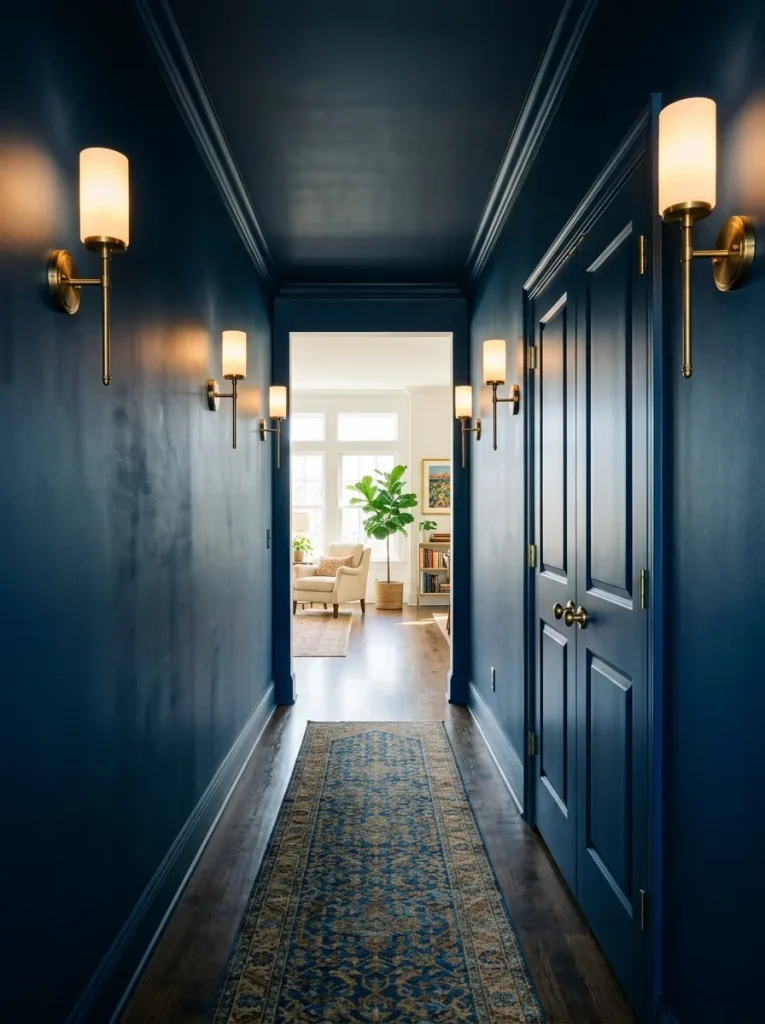
The Monochromatic Tunnel Effect
Step-by-Step Guide
The monochromatic tunnel effect uses a single color shade applied continuously across hallway walls, ceilings, baseboards, and doors to create an immersive architectural statement. By enveloping the entire transit zone in one cohesive color value, sharp room boundaries dissolve, creating a dramatic sense of depth and continuity. Utilizing deep, moody tones like navy blue, forest green, or terracotta transforms a simple passage into a rich, memorable spatial experience that connects lighter adjacent rooms. This color-drenching technique relies on varying paint sheens—such as matte for ceilings, eggshell for walls, and semi-gloss for trim—to maintain subtle textural distinction while preserving color unity.
Executing a monochromatic color-drenched corridor requires meticulous surface preparation and systematic paint application across all architectural elements. Begin by removing all switch plates, door hardware, and wall fixtures, thoroughly sanding glossy doors and trim surfaces to promote adhesion. Apply a high-quality acrylic primer tinted close to your selected final color across all walls, doors, baseboards, and ceiling surfaces. Paint the ceiling first using a flat or matte finish formulated to prevent lap marks across long, narrow spans. Apply two coats of durable eggshell or satin paint to the walls, finishing the doors, door frames, and baseboards with matching semi-gloss paint. Reinstall hardware once the paint cures completely, creating a seamless, sophisticated color envelope.