Integrating suspended Chlorophytum comosum, commonly recognized as the spider plant, into modern home interiors offers an exceptional method to enhance spatial aesthetics, improve air filtration, and utilize vertical square footage efficiently. Spider plant decor hanging baskets ideas have established a major presence across digital inspiration platforms because these resilient arching botanicals produce cascading offsets that create dynamic, living art installations. This comprehensive horticultural design guide outlines ten completely original, highly actionable suspended display concepts engineered to help enthusiasts integrate spider plants into elevated indoor settings seamlessly. Readers will learn how to evaluate ceiling structural capacities, select weather-hardy basket containers, weave custom support networks, and manage moisture requirements for healthy foliage development. Engaging in this vertical plant styling project serves as an outstanding creative project for homeowners wanting to elevate their living rooms, kitchens, and sunrooms while exercising complete control over botanical maintenance and spatial depth. By understanding core interior mechanics, such as natural light angles, ceiling anchor load limits, drainage containment systems, and trailing foliage proportions, you can systematically achieve lush, gallery-grade living displays. Whether your venue is a compact apartment alcove or an expansive double-height entryway, these straightforward step by step tutorials deliver a reliable structural blueprint.
The Architectural Relevance and Popularity of Suspended Botanical Displays
The remarkable surge in global interest surrounding elevated indoor plant displays across contemporary visual design channels reflects a major shift toward biophilic living environments that maximize unused spatial dimensions. These trending ideas occupy a central position in modern home decor movements because spider plants possess exceptional structural adaptability, producing cascading baby plantlets that transform plain overhead boundaries into soft, textured green canopies. From a practical perspective, elevating spider plant containers delivers immense functional value, freeing up valuable floor space and tabletops while positioning air-purifying foliage directly within room airflow paths. This concentrated vertical gardening activity makes suspended container styling an exceptionally rewarding beginner friendly activity that sharpens basic skills in hardware installation, cord knotting, and foliage arrangement without requiring outdoor garden space. Utilizing accessible materials like jute twine, terracotta bowls, metal hoops, and wooden planks relies heavily on budget ideas, allowing decorators to achieve a luxury-tier aesthetic from simple components. The natural flexibility of hanging spider plant displays ensures they seamlessly complement a sleek minimalist style using monochromatic ceramic pots or transition smoothly toward a warm, textured bohemian atmosphere.
Structural Mounting Preparation and Essential Material Sourcing
Thorough ceiling inspection and correct hardware sourcing form the absolute baseline requirements for a completely safe, stable, and long-lasting suspended botanical installation. Before drilling mounting holes or driving ceiling hooks, you must accurately assess the underlying ceiling framing, locating solid wood joists or utilizing heavy-duty hollow-wall toggle anchors to support wet soil weight. The primary materials list for a professional-grade hanging spider plant project includes well-draining indoor potting soil enriched with perlite, lightweight ceramic or woven baskets equipped with interior drip trays, galvanized ceiling hooks, and heavy-duty hanging cords. For the active installation phase, your essential tool kit remains highly accessible, comprising an electronic stud finder, a power drill, wood or masonry drill bits, a digital level, heavy-duty shears, a tape measure, and protective eye wear. Initial preparation requires cleaning your planting containers thoroughly to remove manufacturing residues, ensuring all internal drainage reservoirs function properly before filling them with soil. Confirming that your ceiling joists or anchor systems are rated for heavy loads prevents falling hazards, guaranteeing that your vertical garden installations remain stable over long periods.
Idea 1: The Triple-Tiered Jute Macrame Canopy
Step-by-Step Guide
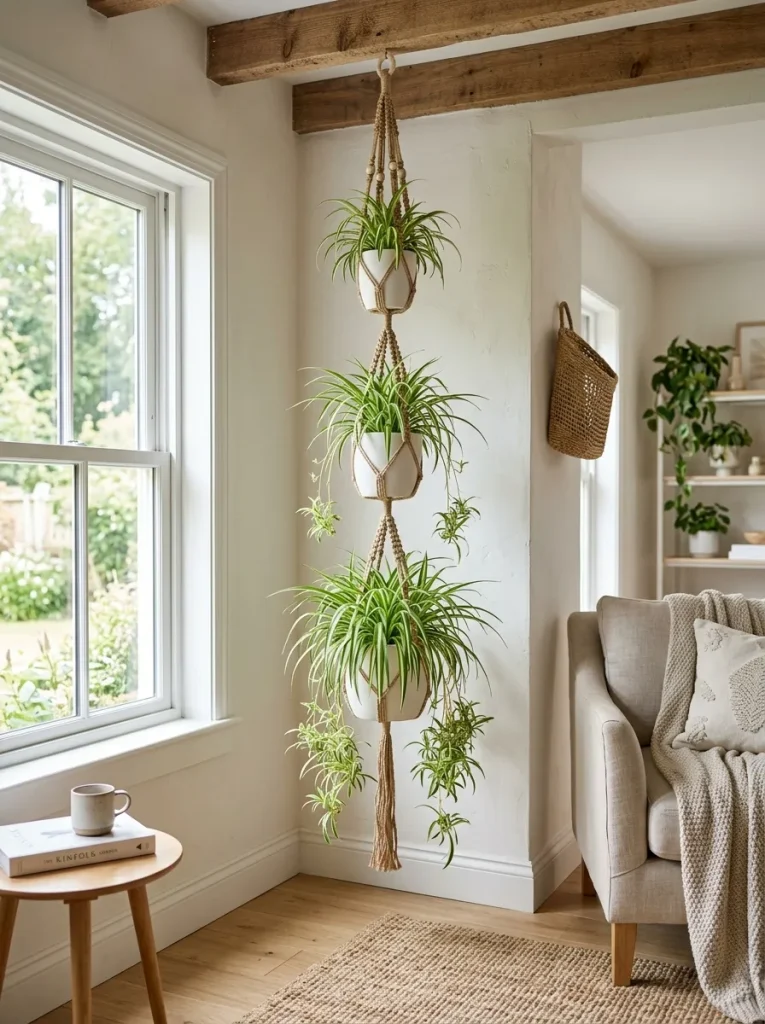
This foundational interior design concept utilizes three hand-knotted jute cord baskets stacked vertically from a single ceiling anchor to build a cascading green pillar in room corners. The layout focuses on vertical space utilization, structural balance, and natural texture integration, allowing spider plant foliage to arch gracefully while baby plantlets trail smoothly between tiers. By selecting natural, unbleached jute twines in warm earth tones, you establish a grounded aesthetic that coordinates beautifully with wooden floorboards and neutral wall colors. This decorating methodology provides an easy project for homeowners seeking a high-impact home decor addition that fills awkward, empty vertical corners cleanly. The strong visual line of the vertical jute cords draws the eye upward, emphasizing room height while displaying multiple plants within a single compact footprint.
To execute this multi-tiered vertical suspension project, begin by locating a solid ceiling joist in a well-lit corner receiving bright, indirect sunlight using an electronic stud finder. Drill a precise pilot hole into the center axis of the wooden joist, screwing a heavy-duty galvanized swag hook tightly into the timber until the flange sits flush against the drywall. Measure four equal twenty-foot strands of five-millimeter natural jute cord, threading them through a heavy-duty steel ring to form eight hanging working cords. Tie square knots systematically at designated interval lengths to construct three distinct, stacked basket cradles spaced eighteen inches apart vertically. Insert three progressively sized lightweight ceramic bowls filled with variegated spider plants into the woven cord pockets, positioning the largest pot at the top and the smallest at the bottom. Hang the completed assembly onto the ceiling hook, adjusting pot positioning to ensure all tiers sit perfectly level.