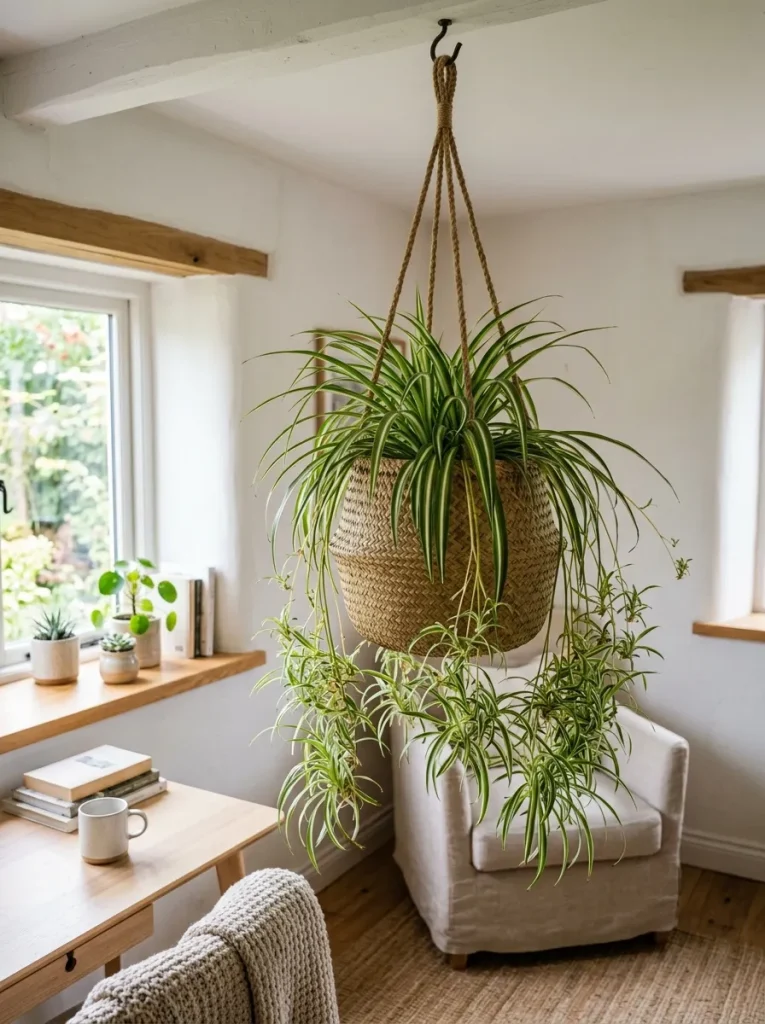
Idea 6: The Woven Seagrass Basket Shield
Step-by-Step Guide
Enclosing standard plastic nursery pots inside natural, hand-woven seagrass or belly baskets introduces rich organic warmth and texture while completely concealing utilitarian growing containers. This design concept focuses on tactile variation, visual softness, and practical moisture containment, using natural plant fibers to buffer modern interior lines. By lining the interior bottom of the seagrass baskets with clear plastic drainage saucers, you create a hidden reservoir that protects wood floors and carpets from accidental irrigation drips. This approach is exceptionally beginner friendly, requiring no advanced crafting skills while delivering an instant aesthetic upgrade that aligns with Scandinavian and bohemian home decor movements. The flexible basket walls accommodate various pot shapes easily.
Select a sturdy, hand-woven natural seagrass basket featuring thick woven handles and a flat, stable bottom base matching the dimensions of your spider plant. Insert a heavy-duty, eight-inch clear plastic saucer flat into the interior floor of the seagrass basket to act as a permanent waterproof liner. Place a mature spider plant housed in a standard plastic nursery pot directly inside the basket, ensuring the pot rim sits two inches below the basket top. Thread three equal strands of thick, four-millimeter natural jute twine through the structural weave of the basket walls, spacing them at equal distances around the perimeter. Tie the upper ends of the three jute strands together in a tight, secure overhand loop knot eighteen inches above the basket rim. Hang the basket from a sturdy ceiling hook, allowing the arching spider plant foliage and trailing plantlets to spill over the natural woven edges.